THE FALSE JEW, IN FACT, OLIVIER DE LA MARCHE
The so-called Relic panel has been one of the most debated and analysed, yet without any plausible conclusion having been reached, all owing to the assumption made from the earliest assessments of the Polyptych that the stout man in question was a Jew.
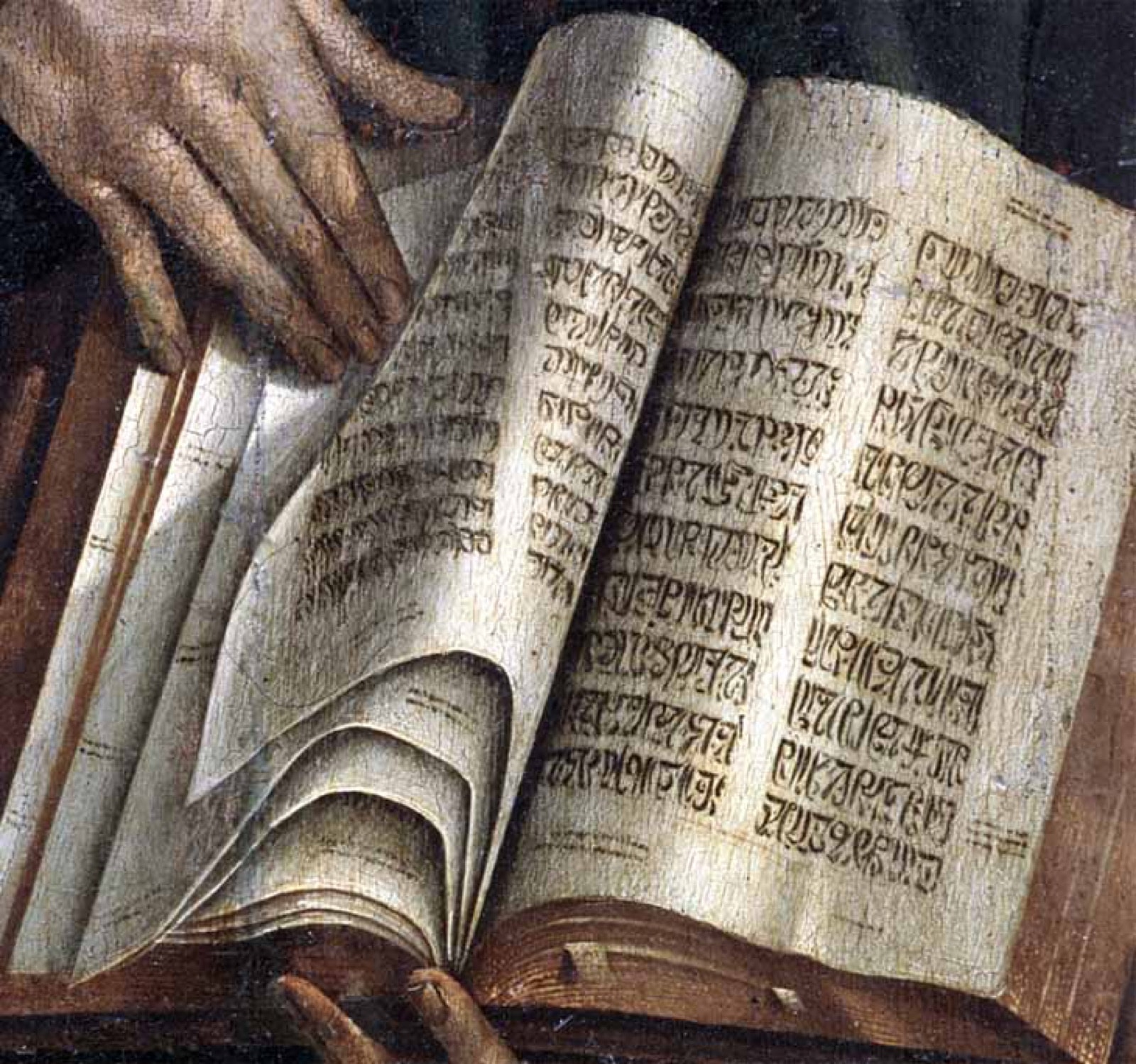
The book he holds up has no readers within the painting; it is intended solely to be displayed outwards, beyond it.
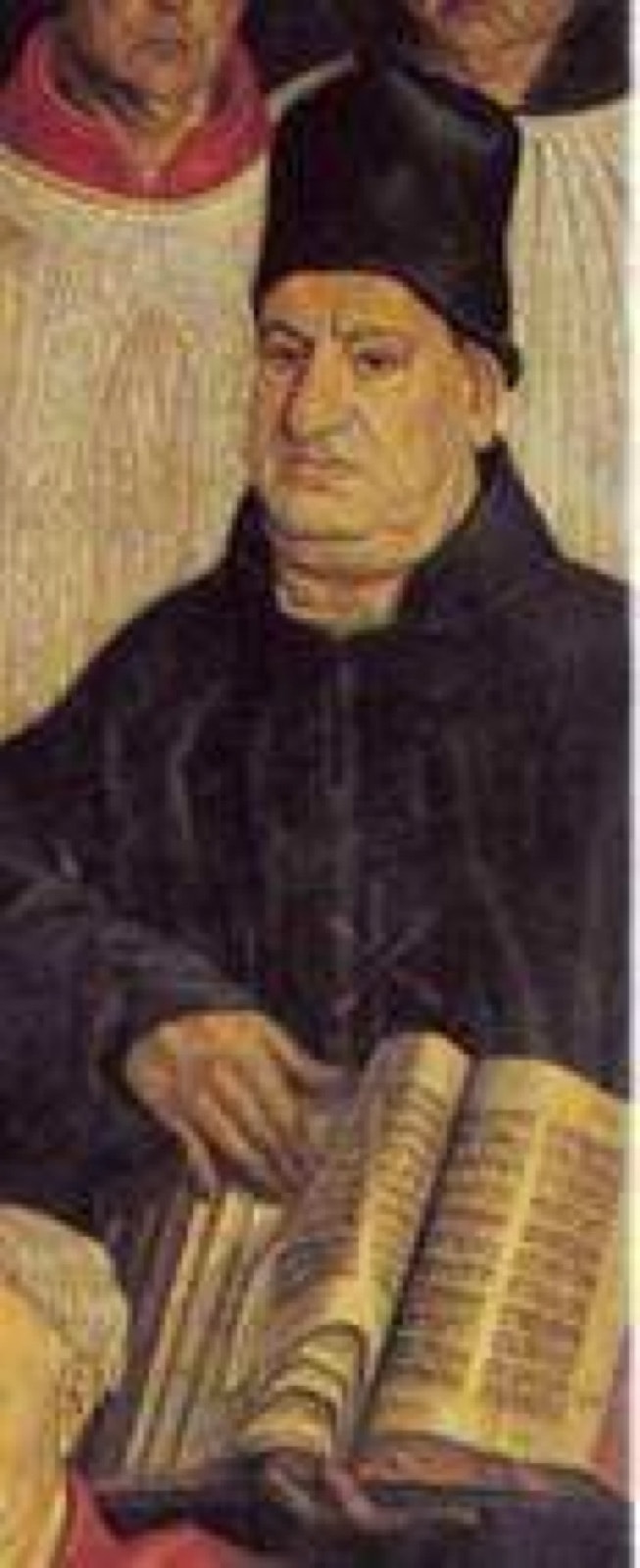
Belard da Fonseca was the first to doubt the Jewish connection of the figure in question and, proceeding from there, to identify him as Olivier de La Marche.
But who was Olivier de La Marche, and what was his involvement in the pact concluded between Afonso V and Charles the Bold, such that he should merit the prominent place he occupies in the Polyptych?
Olivier de La Marche was born in France, most probably in the year 1426, and from a very young age became a page at the Court of the Duke of Burgundy.
Seven years older than Charles, he was his page and, later, his squire, when the future Duke of Burgundy still bore the title of Count of Charolais.
The exact reason why Olivier left France to serve in Burgundy is unknown, precisely at the moment when Duke Philip the Good, Charles's father, an ally of England, was at war with Charles VII, King of France.
In his capacity as Charles's squire, Olivier de La Marche took part in the conflicts between Louis XI and the members of the League of the Public Weal, formed by the princes discontented with the King of France.
At the battle of Montlhéry, Olivier de La Marche, now a knight and commander of Charles's personal guard, conducted himself heroically, and was rewarded with the golden spurs, a genuine title of nobility. From 1467, the year of Duke Philip's death, he continued as Duke Charles's companion-in-arms.
In 1477, after the battle of Nancy in which Charles lost his life, La Marche took refuge at the court of Frederick III, Emperor of Austria, accompanying Mary of Burgundy, the betrothed of Prince Maximilian, whom she would marry that same year.
De La Marche spent the rest of his long life there, dying in the year 1502, when Maximilian occupied the throne of the Austrian Empire.
Contrary to Belard da Fonseca's conviction, Olivier de La Marche was a man of arms and not a chronicler, notwithstanding his two books of memoirs, the first covering the period of the government of Philip the Good, and the second that of his sojourn at the court of the Emperor of Austria, where Olivier is said to have been tutor to Alexander, son of Maximilian.
A plausible reason for de La Marche's appearance in a scene of the Polyptych must lie in the circumstance of his having come to Portugal as part of the embassy of the Dean of Vergy, special envoy of the Duchess of Burgundy, D. Isabel, sister of King Duarte, married to Philip the Good, with the purpose of defending before the King the innocence of Prince Pedro and his children, as well as that of the cousins and brothers-in-law of Afonso V, who had taken refuge at the court of Burgundy after being expelled from Portugal.
King Afonso V would have made his acquaintance on that occasion and communicated to him some of the principal outlines of his millenarian project. He would certainly have recognised him at the meeting with Charles in the camp during the siege of Nancy, more than twenty years later.
It is not possible to know what the topics of the conversation between Afonso and Charles were, but it may be presumed that matters were addressed relating to the pact concluded between the two, to the Quest for the Grail, and to the undertakings that each, in his own way, proposed to embark upon with a view to the consummation of the Fifth Empire.
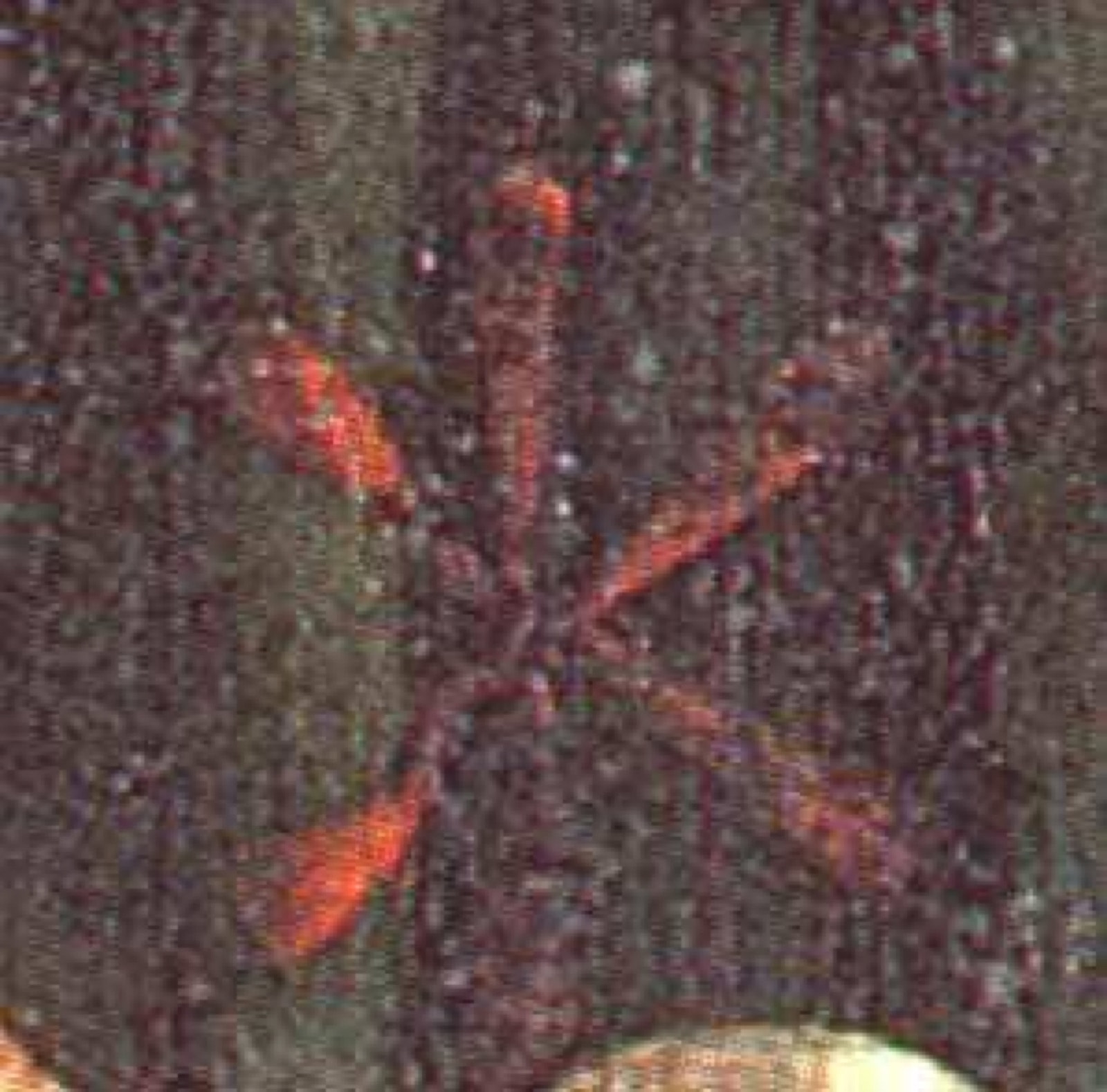
On La Marche's garment there was originally no star of ten or six points.
When the Panels were uncovered, the red star had ten points, later reduced to six during the restoration carried out by Luciano Freire, so as to coincide with the wording of the provisions set out in the Ordenações Afonsinas, which compelled Jews to display red six-legged signs (Star of David) on the area above the stomach.
The original design corresponded exactly to a saltire, or cross of Saint Andrew, the heraldic device of the House of Burgundy, as Garcês Teixeira first demonstrated in 1945. He wrote then:
“It is known that this star, which today has six legs of imperfect symmetry,
had, before the last restoration, eight legs, it having then been ascertained that the two removed did not belong to the original painting. The radiograph now taken, kindly provided to me by the Director of the Museum of Ancient Art (as well as the photograph of the set of panels), shows that the two vertical legs likewise do not belong to the original painting, which is reduced, as may be seen from the radiograph, to a saltire, which must simply be the Cross of Burgundy.”.
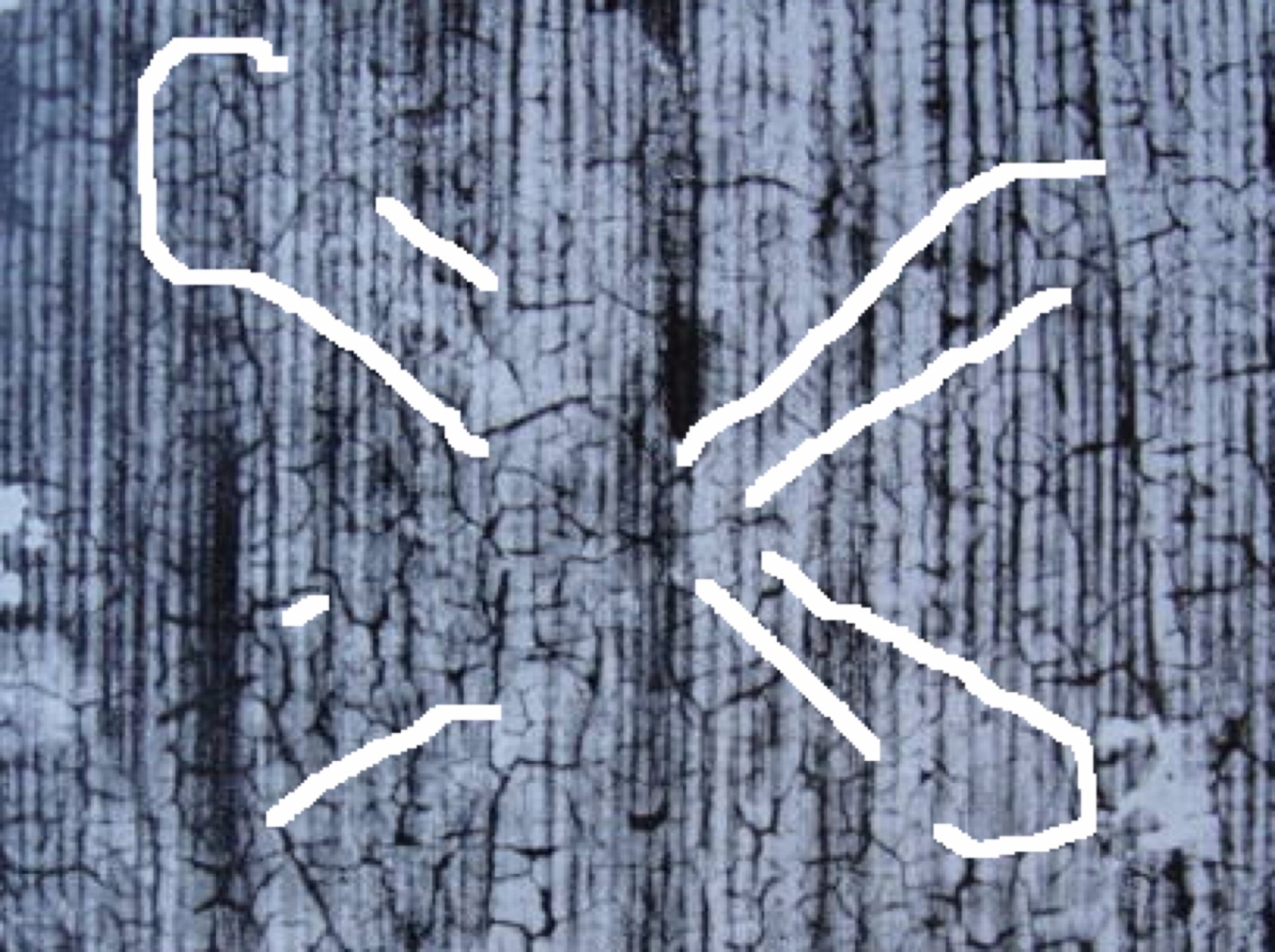
Moreover, the size of the original “six-pointed star” was far greater than that prescribed in the Ordenações Afonsinas, which permits the inference that it was not the discriminatory symbol that Jews were obliged to display.
As regards the reading of the book in Latin, had it been a fantasy on the part of Dr. Belard da Fonseca, how could he have found a passage that is coherent, logical and clear, making reference to a historical event wholly connected with Olivier de La Marche's knowledge of the consequences of Alfarrobeira and, furthermore, evoking the miraculous intervention of Saint Anthony?
On the right-hand page of the book, published in the first volume of his work, the following may be read, in translation from the Latin:
1st column: “Cardinal James, son of Prince Pedro of Portugal, besought Saint Anthony that a sepulchre be made for the body of his father in the Church of Saint Mary”
2nd column: “Saint Anthony, by his holy life, virtuous and most pious, brought it about that the sacred bones of Prince Pedro of Portugal were buried in the Church of Saint Mary, in the month of July 1455”.
In the fourth volume, Belard da Fonseca succeeds only, and only partially, in interpreting the right-hand column of the folded leaf, where he reads:
on the 4th line the Latin name of Jean Jouffroy, in the form J. YOFRIDI, and, at the beginning of the 5th line, CANI, that is, the final part of the Latin word DECANI, meaning dean.
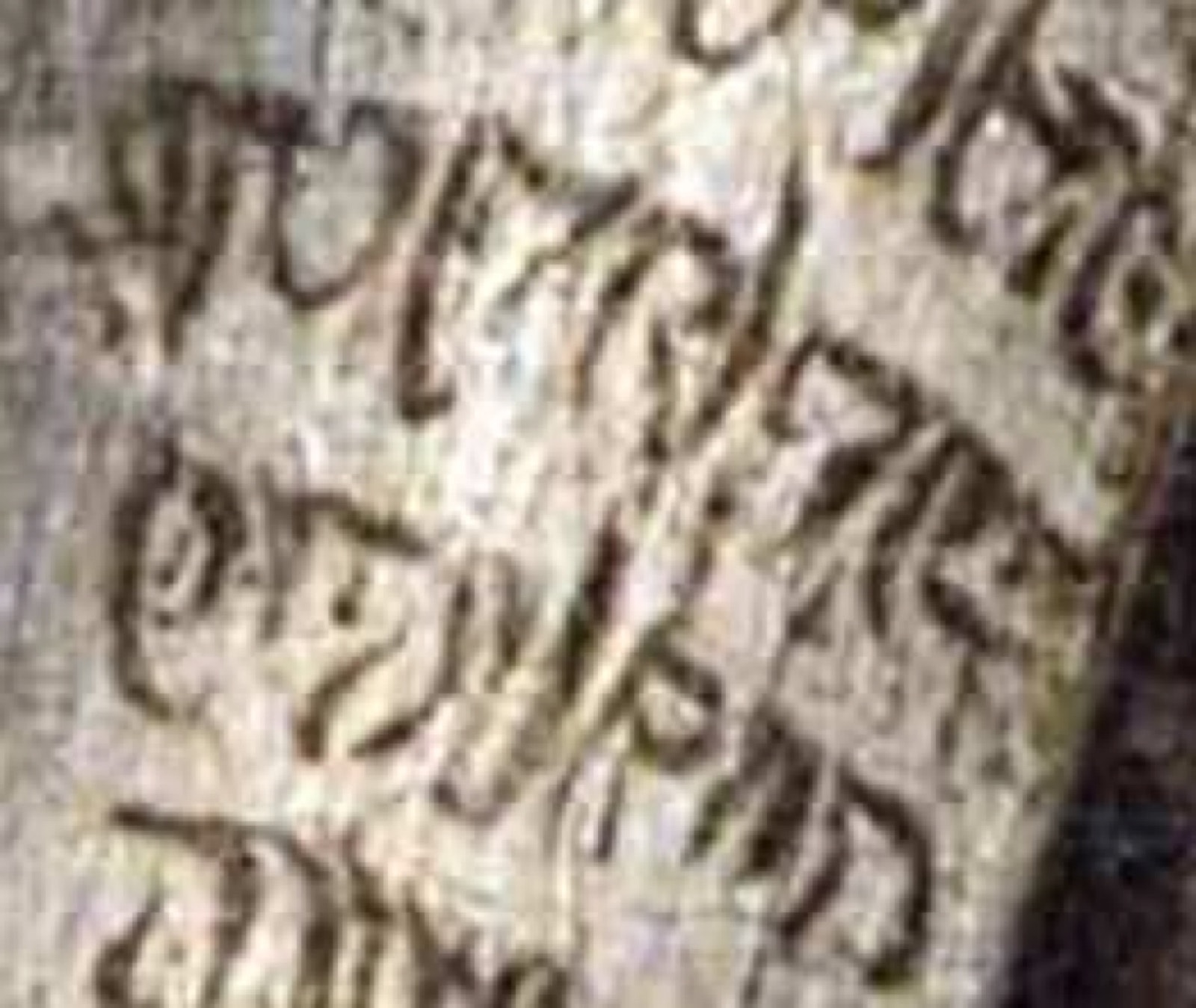
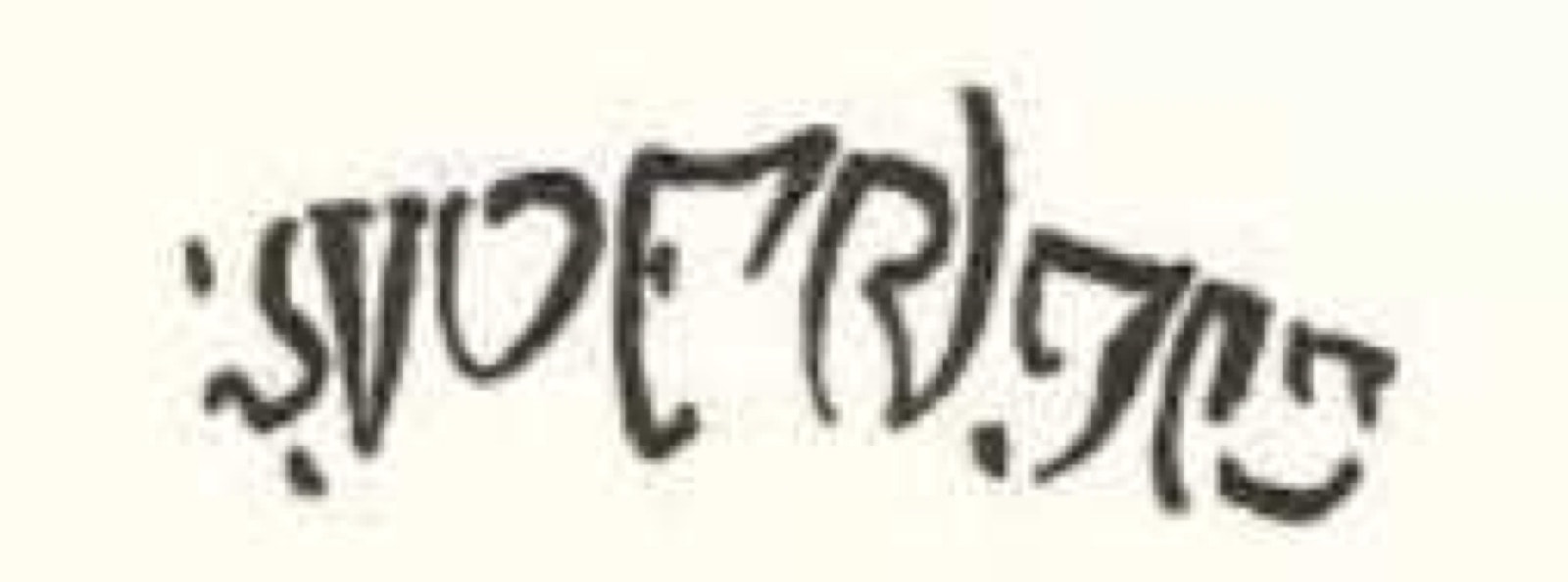
J. Y O F R I D I
Let it further be noted, as a significant detail, that the index finger of the sitter's right hand lies precisely between those two lines (the 4th and 5th), as though to point out the place where the said name is to be found.