THE RELIC AND THE ARK OF THE COVENANT
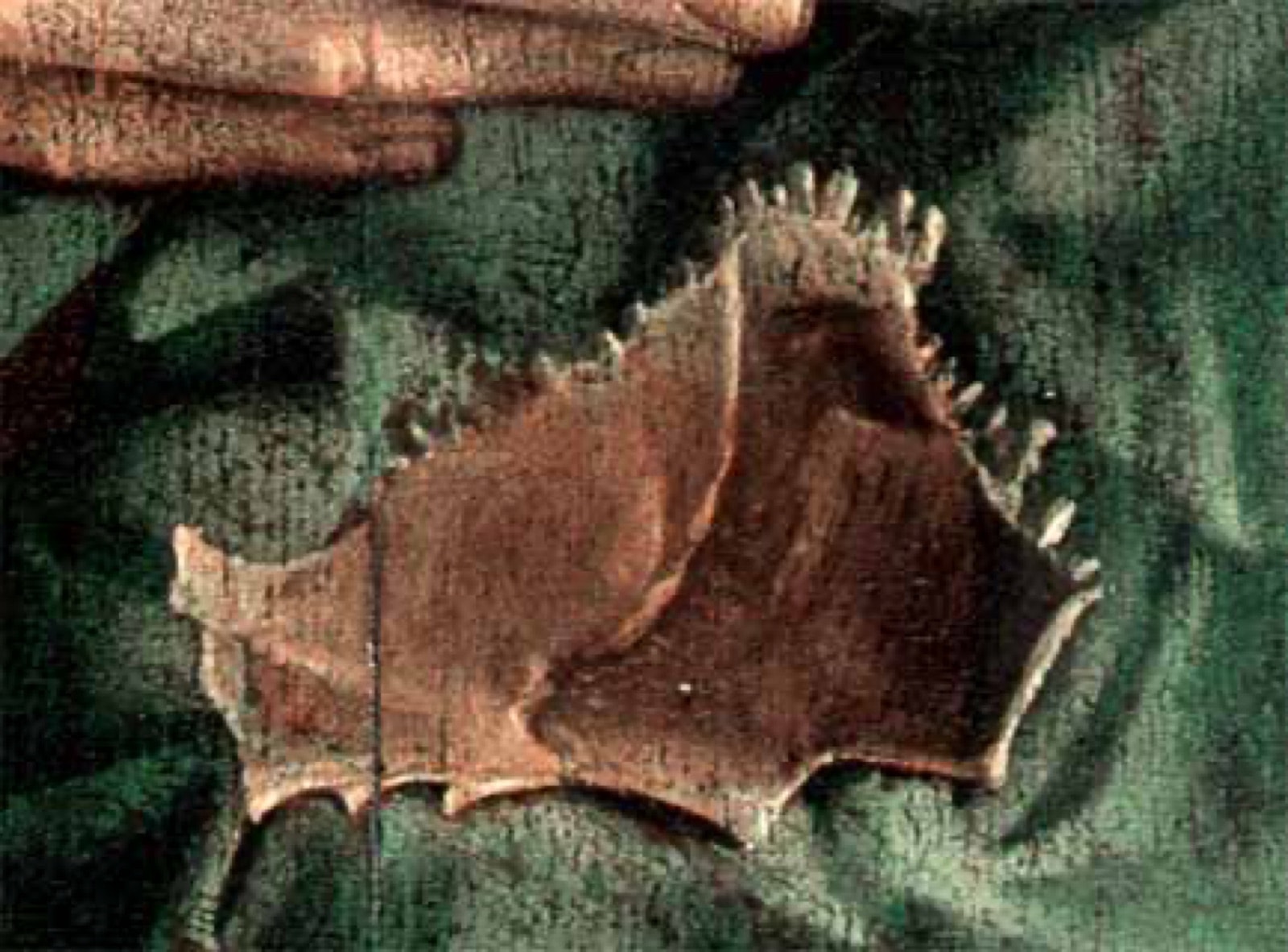
In the panel of the same name a relic may be observed, undoubtedly a bone of the skull, allegedly of Saint Anthony, brought from Padua by Prince D. Pedro.
This relic, irrespective of its exact anatomical identification, necessarily evokes the Ark of the Covenant, for Saint Anthony became known in his time as “the Ark of the Testament”, or “Ark of the Covenant”, by virtue of the proficient wisdom set forth in his sermons and in the lectures he delivered at the University of Padua.
In his will, Afonso V requested prayers of intercession for his salvation directed solely to the Virgin Mary and to Saint Anthony.
Not only is the cap of the Ethiopian monk distinct from all the others, but it also bears a cross drawn upon it that likewise occurs on no other.
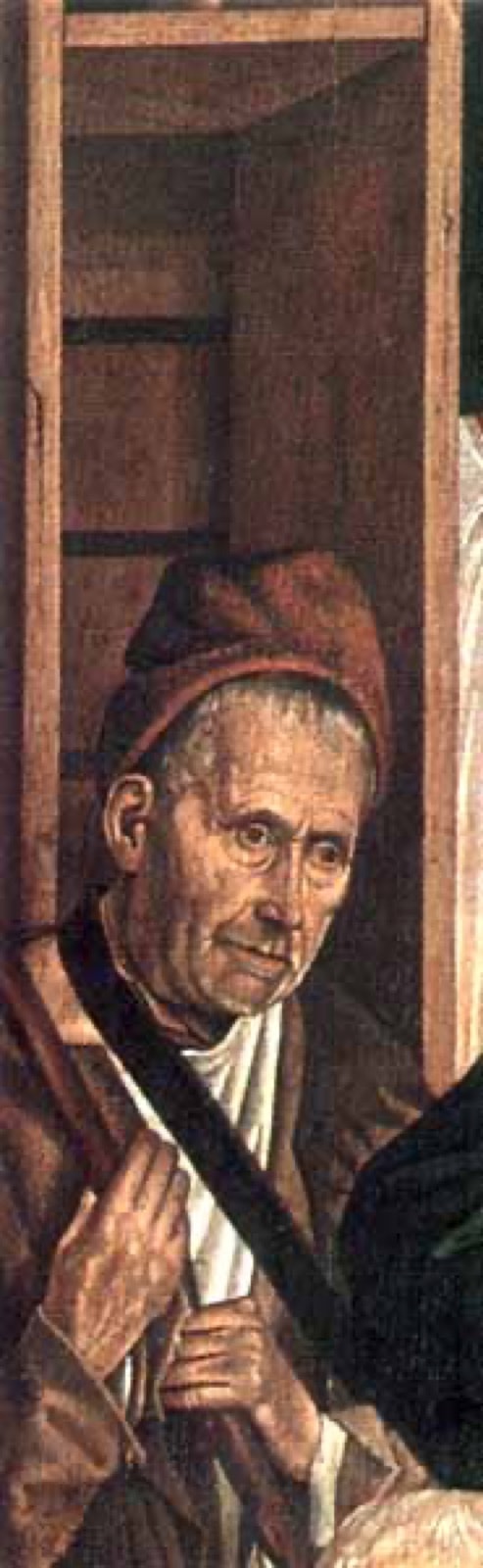
By creating a semblance of symmetry with the wooden board fitted with eyelets, resting on the left shoulder of the Ethiopian monk in the panel of the Friars, the empty wooden box in the panel of the Relic implies a relationship between the two objects. This holds notwithstanding that the monk with long hair and beard and the guardian of the ark do not agree in the direction towards which they are oriented.
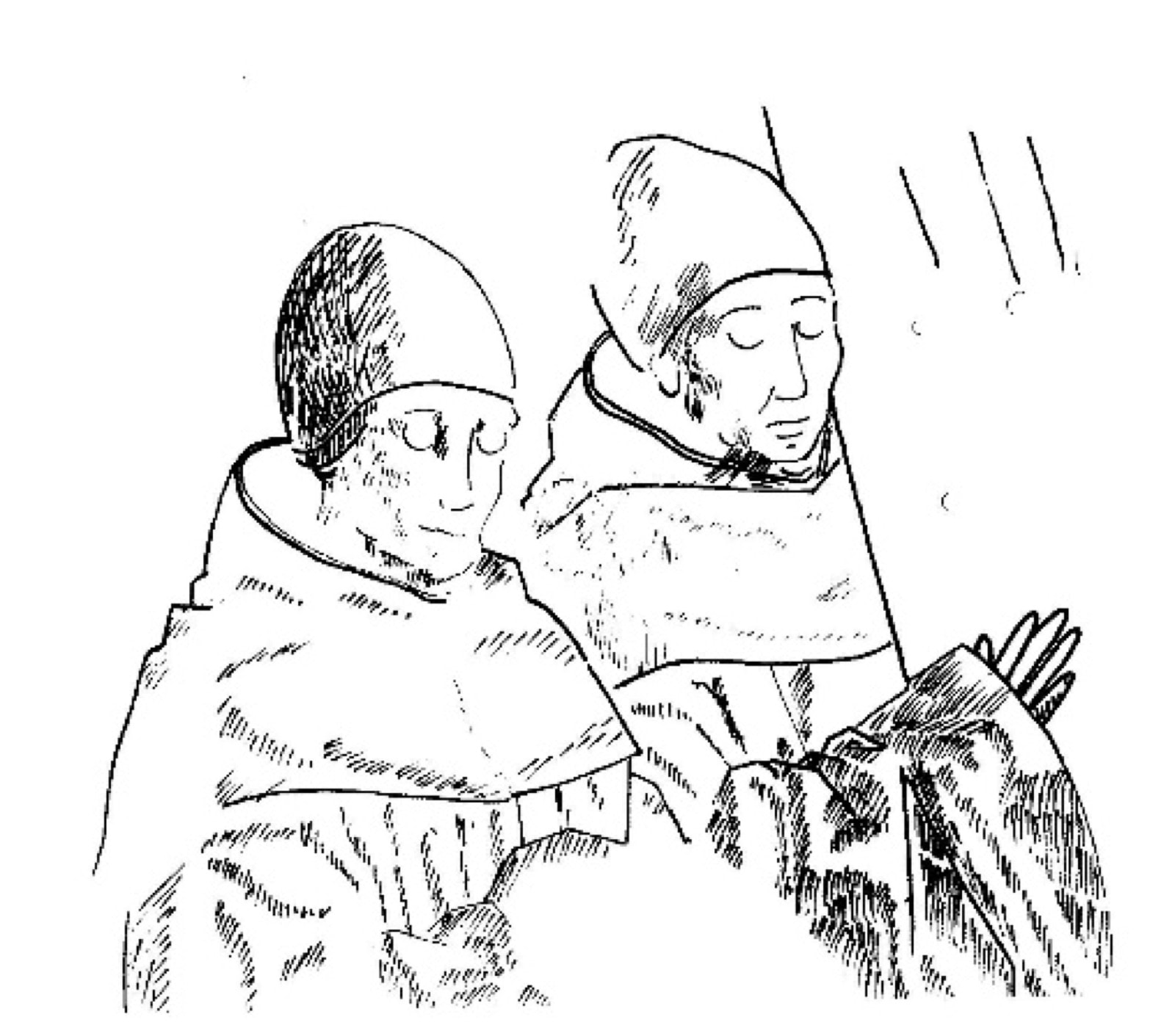
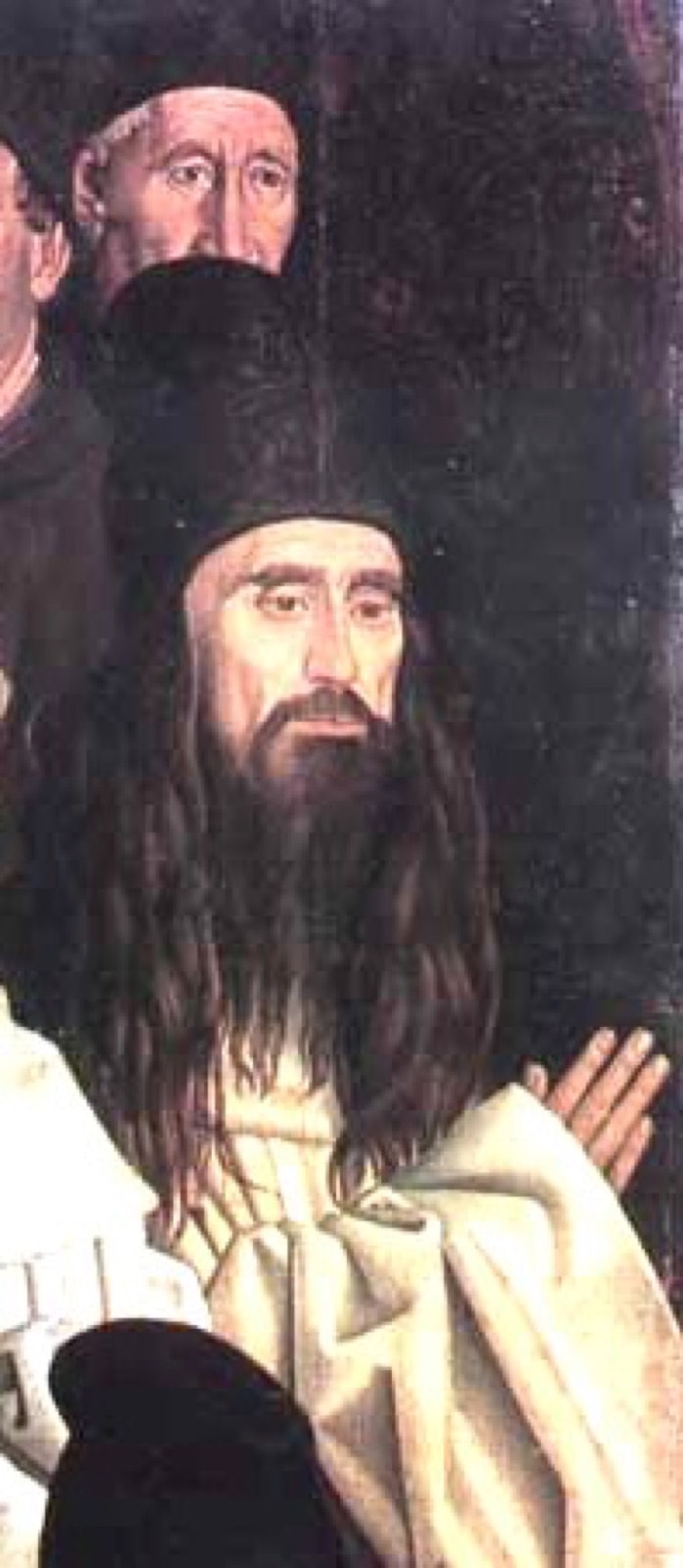
The width of the plank, by reason of the similarity of its dimensions, gives the appearance of being the lid of the ark, being, moreover, too narrow for a coffin.
One is left with the impression that the dark transverse bars painted in two different colours on the interior of the ark (resembling ascending steps) do not appear to be a casual peculiarity. Likewise, the side boards of the ark, instead of ending at the points where they meet the top board of the panel, extend vertically beyond it and outside the painting, reinforcing the suggestion of ascent.
The guardian of the ark holds two staffs, each in line with the other, which create the illusion of a single long staff, although there is no staff in the interval between his two hands.
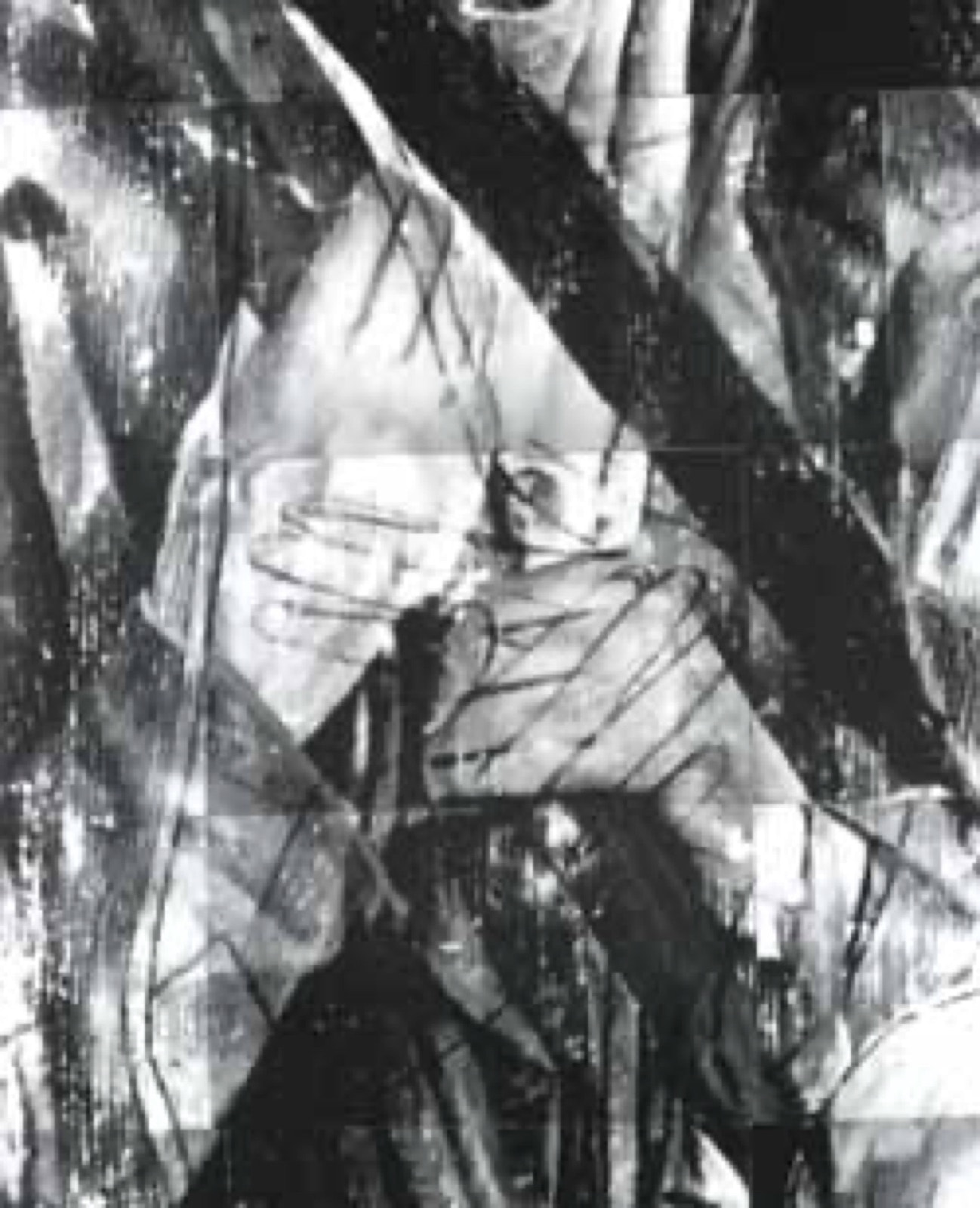
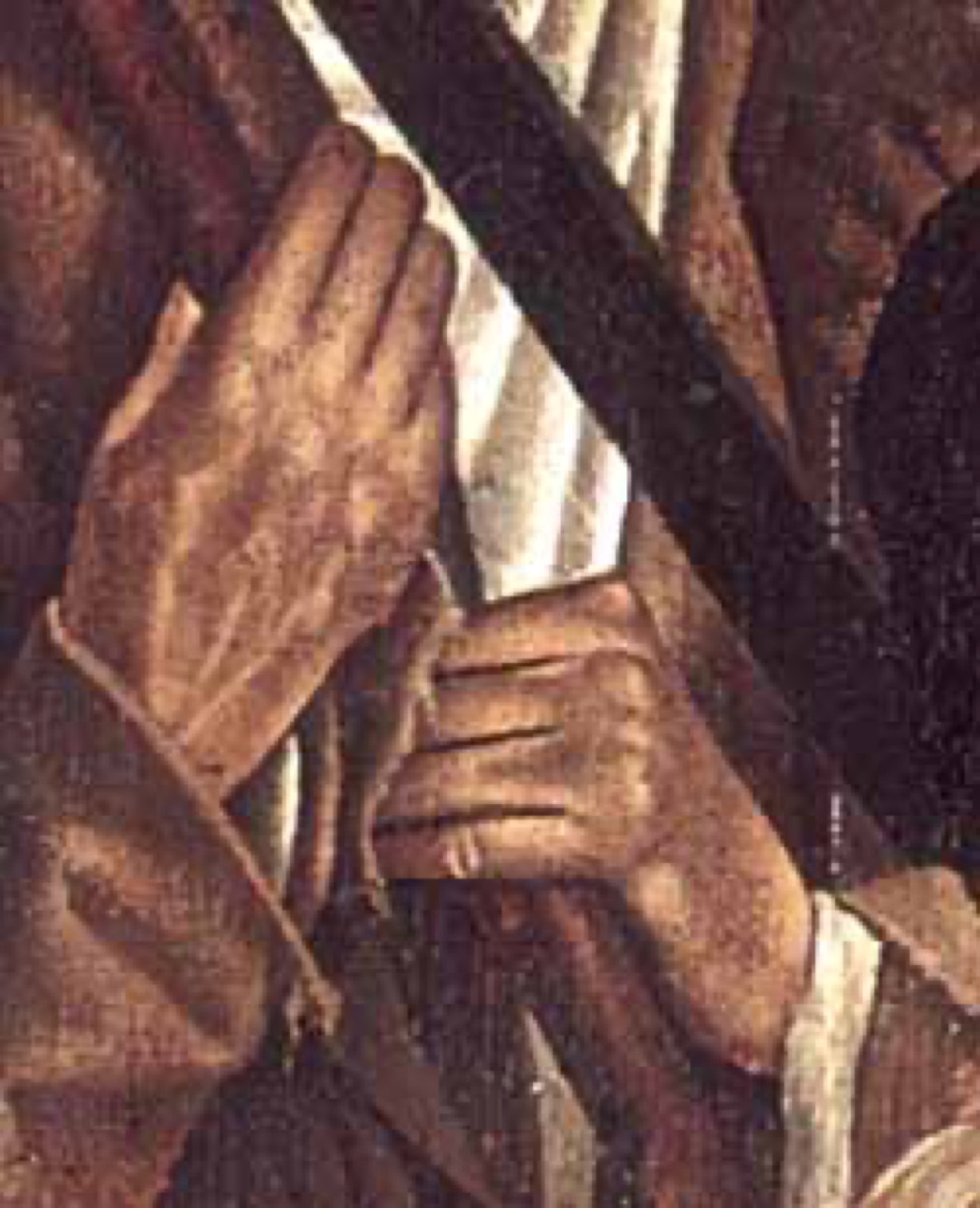
This is intentional, since, in the whole panel of the Relic, the only visible alteration to the underlying drawing occurs precisely in the position of the hands that hold the two staffs, and consists solely of a modification in the space that separates them: in the original version, the two hands crossed, concealing the separation of the staffs.
It is presumed that these staffs may be intended to carry the ark, being for this purpose threaded through rings which, if I am not mistaken, are visible in the panel.
If, in fact, this is, as I believe, an allusion to the Ark of the Covenant — which the embassy sent by Prince Henry the Navigator (Infante D. Henrique) to the Ethiopians (who reciprocated it), with a view to organising a new Crusade to liberate Jerusalem from the Muslim yoke, helps to explain — why is it shown open?
I believe that the principal reason for such a choice arises from the conviction that, in the future Age of the Paraclete, as Afonso V foretold it, it would become pointless to keep secret the formal foundations of institutional religion: the 10 commandments inscribed on the Tablets of the Law contained in the Ark of the Covenant would no longer need to be imposed in the manner of the preaching of Moses (Age of the Father), or of that of Jesus (Age of the Son), for after the End of History, in the Era of the Holy Spirit, the redemption of humanity would be consummated and, by virtue of it, its definitive liberation from any external religious constraint or dogma.
It remains to note the almost imperceptible existence of a set of nine eyelets on the lid of the ark, forming a configuration possibly alluding to as many stars of the Pleiades, from whose Cluster (M45) there will proceed, according to a venerable astrological tradition (assuredly familiar to so accomplished an astrologer as Afonso V), a celestial phenomenon of unusual proportions and eschatological character pointed to as one of the prognostic signs of the End of History.