POLYPTYCH
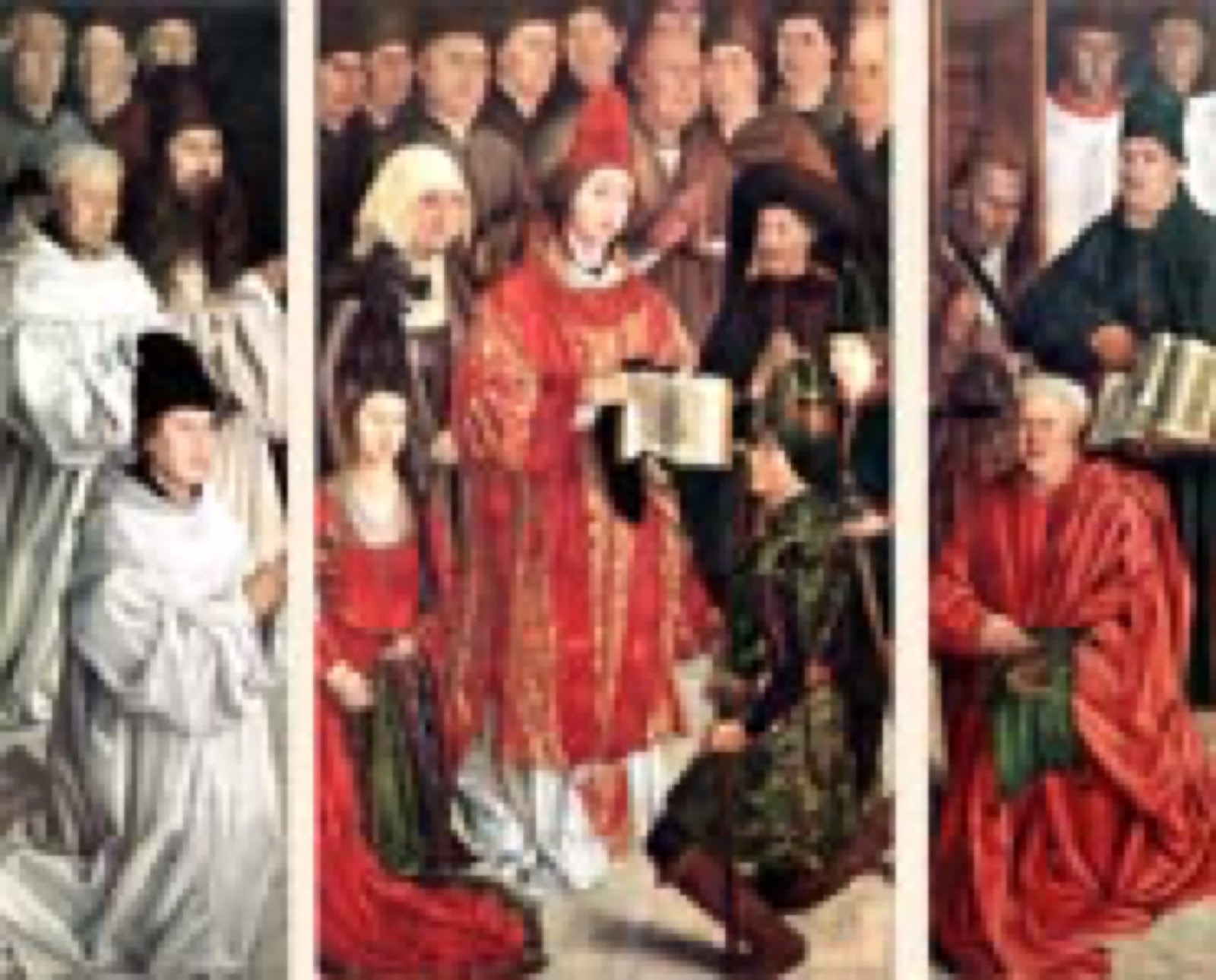
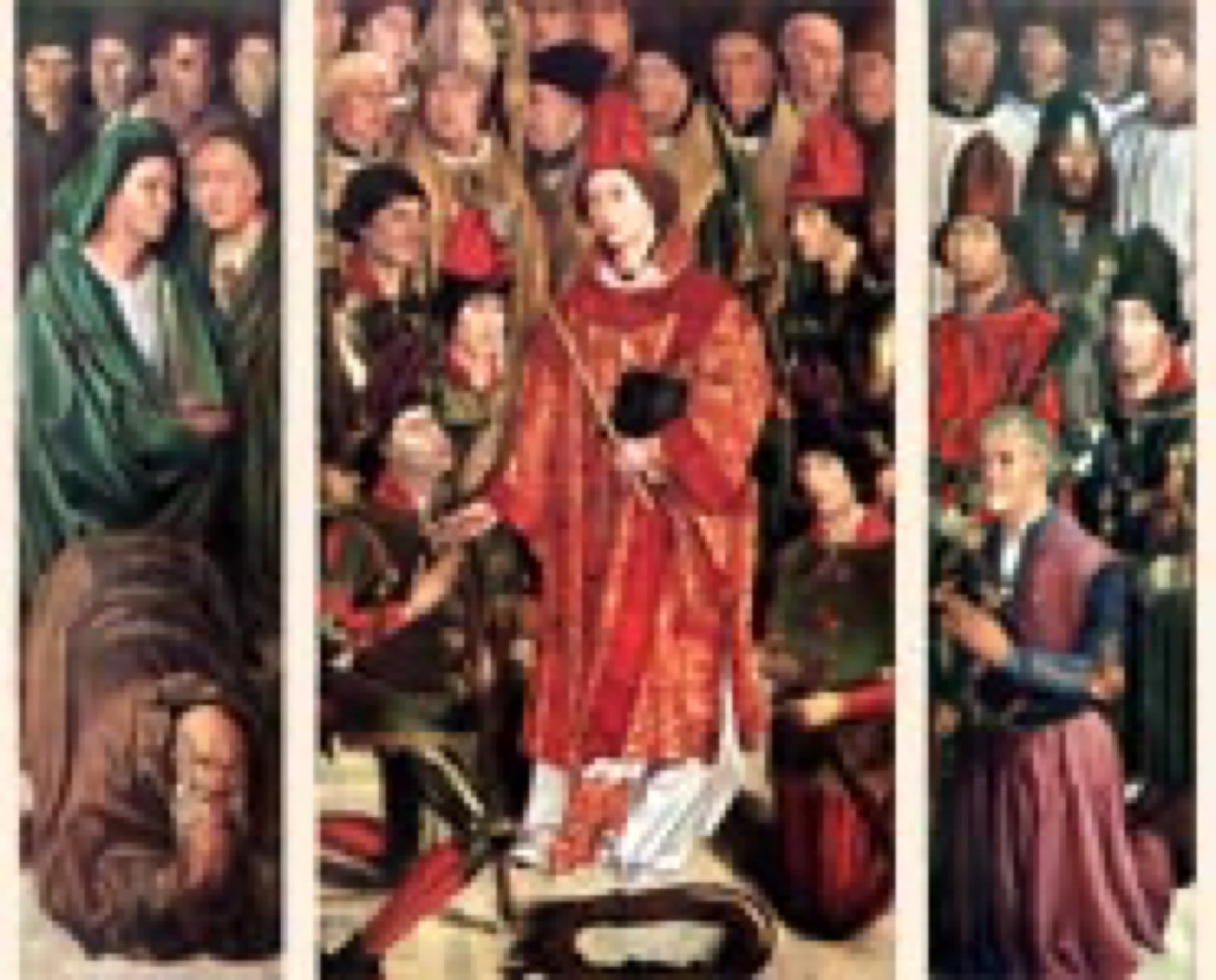
• 1478–1481?: painting of the Polyptych allegedly intended for the Royal Chapel of St Michael in the Palace of the Alcáçova of Lisbon. Only these dates are consistent with the majority of the variables involved, namely: the miniature of the Child’s sword, a replica of that of D. Isabel and D. Fernando, presented to the monarchs of Castile in 1475; the doublets (1460–1480, ± 5 years); the arms depicted (1476–1500); the age of the Child, born in 1476; etc. The Polyptych was never displayed to the public, having been kept in the possession of the Royal House in one of its residences during the reign of King Afonso V, and passing (?) after the monarch’s death into the custody of the “Excellent Lady” († 1530).
• 1532: the year of the transfer of the Polyptych to the Cathedral following the death of the “Excellent Lady”, or, more probably, of the damage suffered by the Chapel of the Palace of the Alcáçova of Lisbon as a result of the strong earthquake of January 1531.
• 1534: first known reference: it is inferred from the account of Francisco Pereira Pestana that at least the central panels of the Polyptych (Prince and Archbishop, and perhaps that of the Knights) were displayed beside the altar of St Vincent in the chancel of Lisbon Cathedral. They are presented as constituting a novelty, beside the royal tombs and the Altarpiece of St Vincent (Doc. Francisco Pereira Pestana).
• 1567: André de Resende refers to the garments, the footwear and the manner of covering the head in the “most ancient painting”.
• 1570: it is again mentioned from memory by an anonymous author: two saints facing one another with the presence of many figures of lords and noblemen, some with multicoloured headdresses upon their heads. The author of this account offers his own interpretation of them, which we now know to be fanciful, since there was no repainting of the “Saint’s” head, adding that the Polyptych had been displayed beneath the Altarpiece of St Vincent, whence it had been removed, he being unaware of its destination (Rio de Janeiro Doc.).
• 1570–1882: the Polyptych disappears (no references being known in this interim), its whereabouts unknown. There are, however, indications that it was the object of four restorations, one of them intended to remove drops of wax and, possibly, affected paint, inasmuch as it had been in contact with lit candles.
• 1882: the six panels comprising the Polyptych are discovered in the Monastery of São Vicente de Fora, the four smaller ones physically joined two by two.
• 1895: it is the object of an initial appraisal.
• 1909–1910: it is restored by Luciano Freire; following the restoration and meticulous recording, it is found that 2 of the panels resulted from the assembly of a join, thus identifying 2 large panels and 4 smaller panels corresponding to half-shutters, the doubt as to their relative arrangement remaining.
• 1910: before being incorporated into the MNAA, it is presented to the public for the first time at the Portuguese Academy of Fine Arts, arranged as 2 triptychs.
• 1926: by virtue of his analysis of the perspective of the tiled pavement, Almada Negreiros proposes the present altarpiece arrangement.
• 1940: the Polyptych is, for the first time, displayed at the MNAA according to the altarpiece arrangement proposed by Almada Negreiros.
• 1955: restoration carried out by Fernando Mardel Araújo before being exhibited at the Royal Academy, in London.
• 1994: during the tests carried out by infrared reflectography, not only the underlying drawing is detected, but also indications that corrections and adjustments occurred between the plan initially traced and the final version known today, notably in the position of certain figures and in the costumes worn by others.
• 2001: dendrochronological analysis of the Baltic oak boards, conducted by the dendrochronology specialist Peter Klein, of the University of Hamburg, finds that the dating of the most recent growth rings coincides with the period between the years 1383 and 1431.
• 2013: a new laboratory study is published concerning the constituent materials of the base preparations of the three sets of paintings already mentioned (Polyptych; Mysteries; and Saints), which concludes “[…] that there are differences in composition in the preparatory layer between the Polyptych and the paintings of the other two groups which suggest that in the former a different batch of ‘gesso’ was used.” The results of these microscopic analyses are eloquent, demonstrating that the Polyptych cannot be confused with the Altarpiece of St Vincent.
• 2019–2026: complementary laboratory examinations, led by Joaquim Caetano and supported by the Hércules Laboratory of the University of Évora, intended to detect and remove overpaints from different periods and to fill the resulting lacunae.