THE CHILD EMPEROR OF THE LAST DAYS
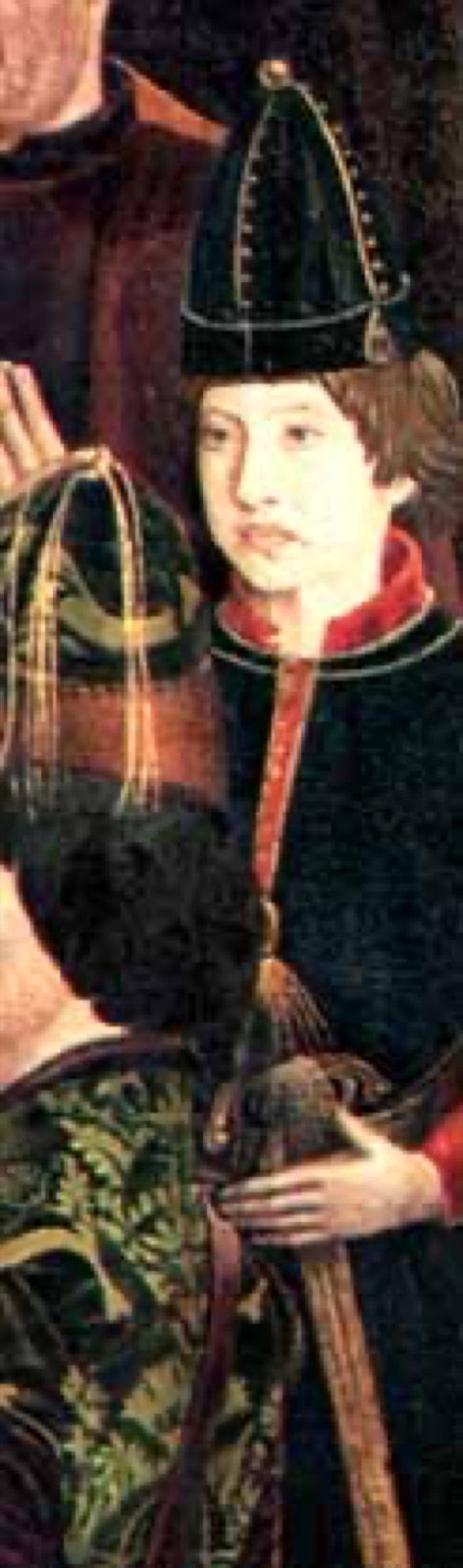
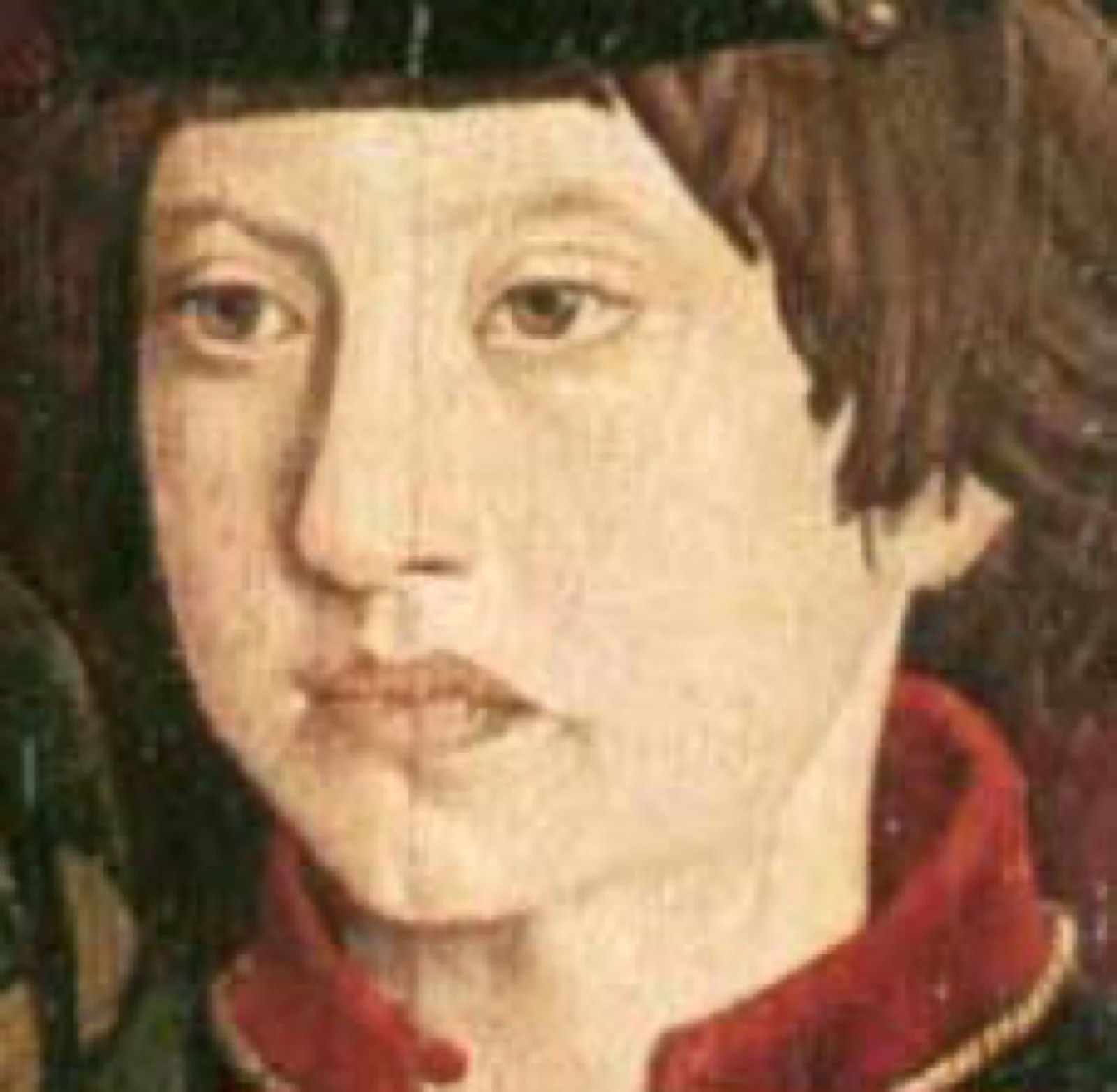
He is the most important individual figure in the Polyptych, after Melchizedek, since, like him, he was depicted standing, holding a miniature sword, at the geometric centre of the composition (where the respective diagonals intersect).
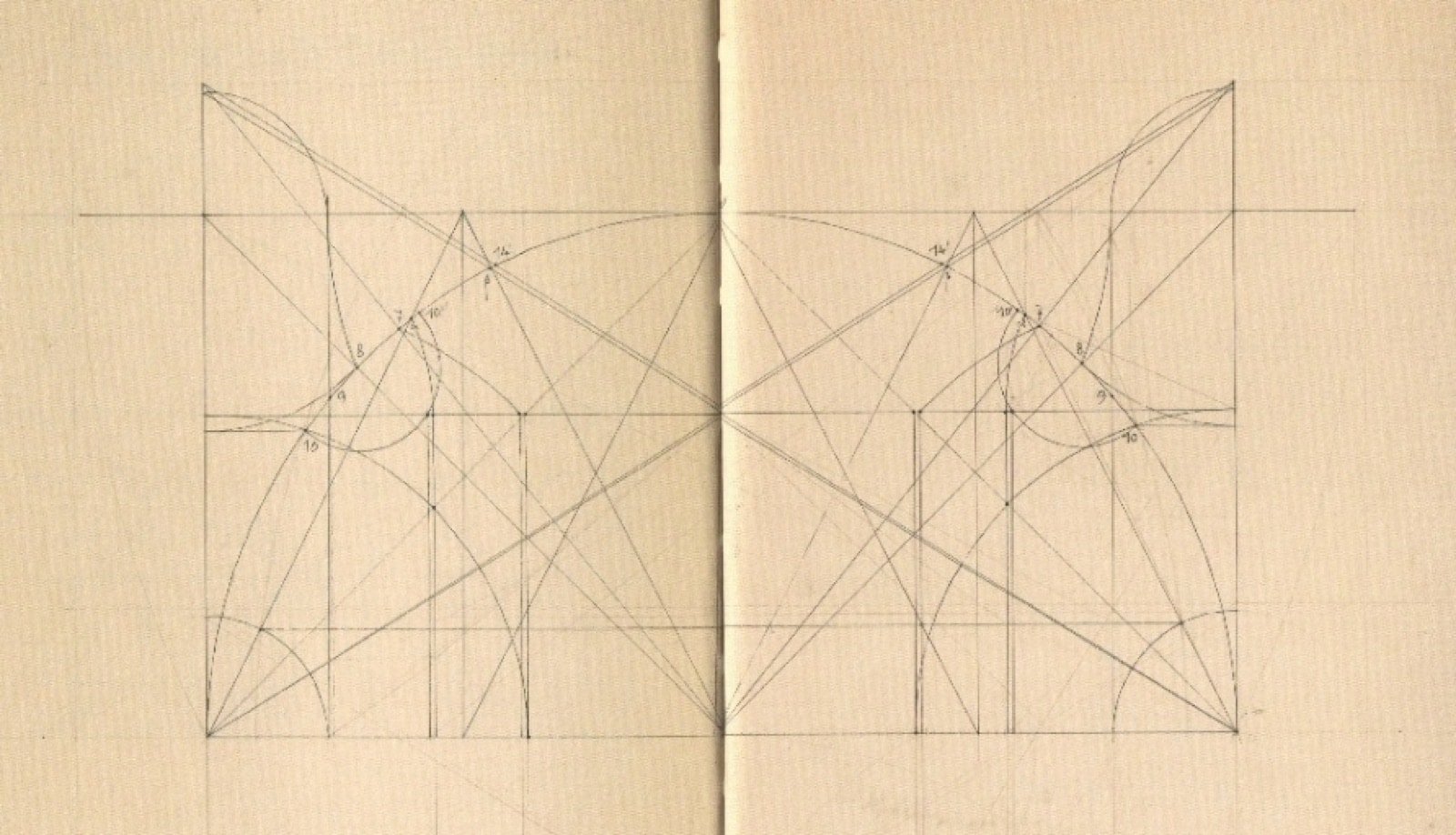
Vanishing points of the Polyptych – Almada Negreiros
By name D. Gonçalo Afonso de Avis Trastâmara Fernandes, he was born on 6 March 1476, son of King Afonso V by his niece D. Joana, Queen of Castile.
He was forcibly banished to Madeira, where he married D. Isabel Fernandes de Andrade, daughter of Fernão Dias de Andrade and Beatriz Delgado.
There he lived as the Hidden One, it being locally held that one of his descendants will be the “Saviour of Humanity” when he draws the sword of the Longed-For One from a crag on the Island.
The Viscount of Porto da Cruz recorded this Madeiran tradition, according to which the sword of D. Sebastião lies embedded in the Penha da Águia:
“Rounding to the east the Ponta de S. Lourenço, on the Coast of Madeira, great inlets open out where the sea rests a little from its ceaseless fury against the basaltic rocks, ever impassive. At the head of the largest of these inlets, sheltered by the gigantic rock of the Penha da Águia, which rises from the sea and reaches into the land, lies the small settlement of Porto da Cruz. <w:t xml:space="preserve">
Hemmed in by rocks of black petrified lava, the settlement cannot easily expand. But the fields that stretch out, rising up the slope of the gigantic mountains, are perhaps the richest and most beautiful of the whole Island. The mountains are clothed in diverse shades of Green. Through the centuries-old woods that descend into vertiginous chasms, strong torrents of crystalline water plunge, foaming.
In the old Manor of Lombo dos Leaes, in Porto da Cruz, where a branch of my Family was bound to the land, I spent the best days of my life. Facing the manor, beyond hills and valleys, swells the gigantic back of the Titan that shelters the settlement. It is the Penha da Águia. Contemplating the immense rock, from the side of Faial, its slopes are accessible, green and fertile, but above Porto da Cruz the Penha da Águia is barren, sheer, riven by caverns that no human being has ever reached.
In the uncertain light of dusk those caverns recall the great and gloomy eyes of the monsters that dwelt in the legends of the Tenebrous Sea, which the Portuguese opened up. Sheer above the sea, the Penha da Águia drops vertically, for more than three hundred metres, as though fantastic engines had thus hewn it.
But the rock, thus cut vertically, has a “ledge”, inaccessible, which served as the motif for popular fancy to create the legend that the Sword of D. Sebastião was embedded there by a powerful “genie”, and only on the day when a man of strong spirit manages to reach that place will the enchantment be broken [...]”.
Although held in confinement, he lived with princely grandeur on the Island of Madeira, where every year a ship arrived from Lisbon bearing all that he needed.
Gonçalo Fernandes held the rank of moço fidalgo, as did his sons, together with the Habit of Christ. He was overseer (vedor) to Prince D. Fernando, successor to Prince Henry the Navigator (Infante D. Henrique) in the administration of the Order of Christ, and father of King Manuel. It is held, by tradition, according to Afonso de Dornellas, that his descendants possessed an original letter that King Afonso V had written to him, attesting that he was his father and that his mother was D. Joana, the “Excellent Lady”.
He founded the chapel of Our Lady of the Conception, at Serra de Água, in the parish of Arco da Calheta, which became the head of an entailed estate (morgado) that he instituted for his firstborn, in a will made jointly with his wife. This hermitage had its own chaplain, and was furnished with fine appointments and paintings.
Upon it he placed as arms the Portuguese quinas in saltire over a cross of the Order of Christ.
With the same arms he sealed the will under which he died on 13 July 1539:
“Record of the death of Gonçalo Fernandes: on 3 January of the said year fifteen hundred and forty, in the [...] [115]// of this house of the Holy Spirit, died Gonçalo Fernandes of Serra de Água, who passed away on his estate at Atouguia; to whom I, Salvador Gonçalves, as the curate that I now am of this church of the Holy Spirit, as soon as I was assured of his infirmity, went to attend him and to learn whether he wished to receive each of the three sacraments of Holy Mother Church necessary at the hour of death; it was said by his sons that he had already received them from Friar Diogo, vicar of São Brás, who, of necessity and in order to force and to break the possession and jurisdiction of this house of the Holy Spirit, did so likewise; and after his death I went with the beneficed clergy to commend his soul and to ask sight of his will so as to learn where he wished his burial; which was denied me, and, without sight of it, I was once more thwarted by the said Friar Diogo in the commendation of the said deceased, and he carried him off to the hermitage of the Conception outside this parish; wherefore I thus had no sight of his will; only by report do I know that he made a will, approved by Diogo Fernandes, notary of this town.
Salvador dAmill”
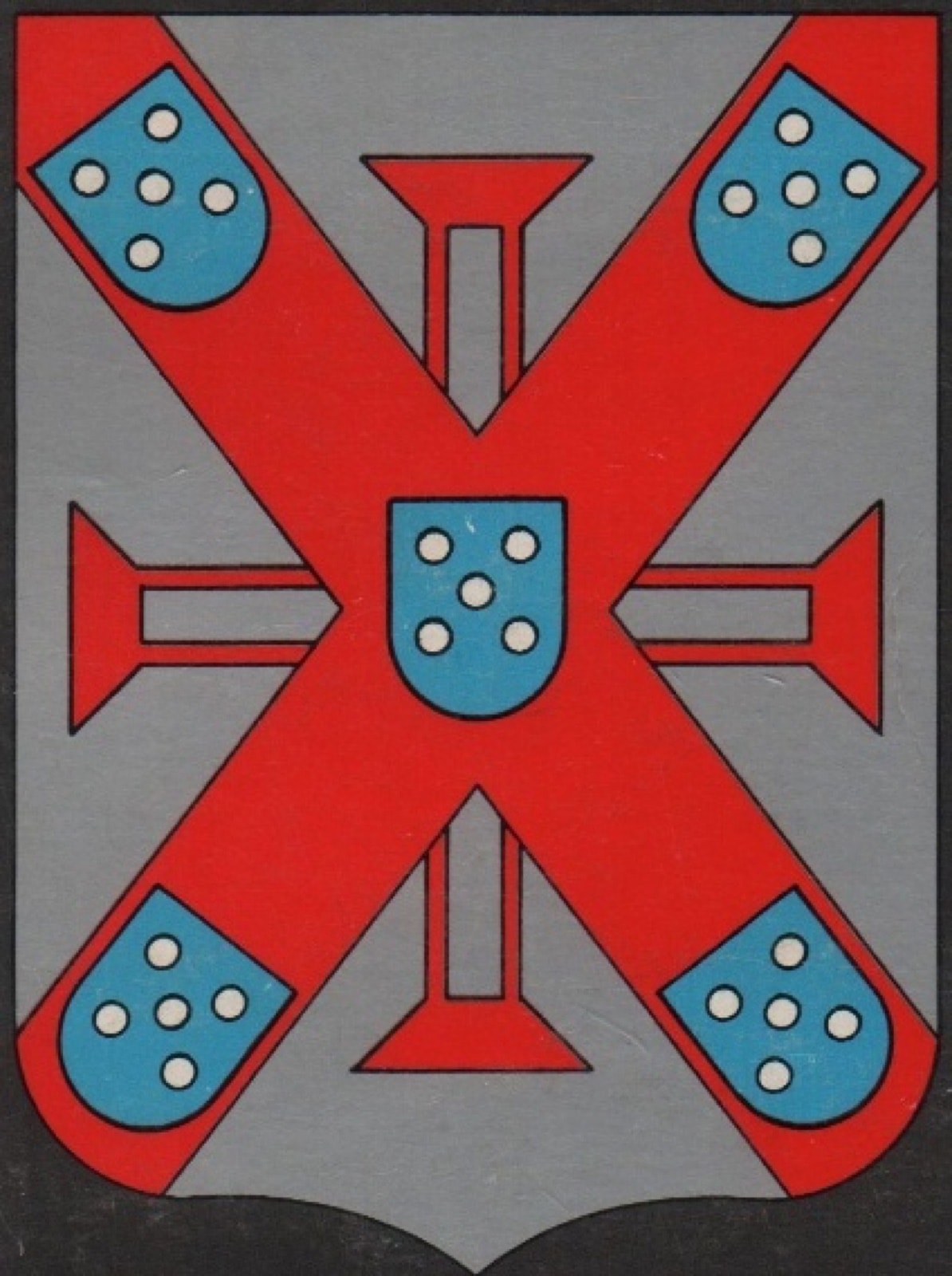
On the marble sepulchral slab were engraved his name and, in half-relief, the figure of a child with his face covered by his left hand, resting his elbow upon a skull, and with his right hand pointing to the sentence drawn from the book of Wisdom (V, 13): "Sic et nos nati continuo desivimus esse" (And we, too, as soon as we were born, ceased to be).
It was he who had the right to succeed to the throne of Castile and of Portugal, but King João II, for political reasons, concealed his birth and forcibly exiled him.
The reduced size of the Child’s sword is explained by its being a miniature replica of the sword, symbol of power and command, presented in 1475 to D. Isabel the Catholic, usurper of the throne that belonged to his mother, D. Joana.
This symbolic weapon corroborates the assertion that he was the legitimate heir to the throne of Castile, with the right to bear it.
Furthermore, examination of the Child’s sword also corroborates the date of the Polyptych’s execution (1478 to 1481).
Indeed, it is fitting to abandon definitively the thesis that the Child portrays Prince D. João, son of King Afonso V and the future King João II, as the majority of interpreters mistakenly propose.
Yet, whatever the date of the Polyptych (never earlier than 1467), D. João would have been at least 12 years old, which cannot be accepted as the probable age of the Child.
Others, no less mistaken, insist that the face of the Child was repainted so that he might be identified as Prince D. Afonso, son of King João II and therefore grandson of King Afonso V. In that case, the presence in the Polyptych of his father, D. João, would become obligatory and obvious, and he, as is well known, is not portrayed there, for, were he present, he would be readily identified.
Calculating the height of the Child in the Polyptych, one finds that it is no greater than one metre and five centimetres, corresponding to that of a child of four to five years (at most), precisely the age of Gonçalo Fernandes in 1481, the probable year of the Polyptych’s completion.
The existence of a son of his and of D. Joana, Queen of Castile, whose throne had been treacherously usurped by Ferdinand and Isabella, the future Catholic Monarchs, together with the death of his cousin, Charles the Bold, made it evident to D. Afonso that the transcendent Mission, received as the heritage of his ancestors, had not been annulled but merely deferred to an indeterminate future, remaining, in any case, destined to be fulfilled through the intervention of his descendants.
The Polyptych will have been conceived as a means of preserving and transmitting the message to his direct descendants (the foreground of the central panels) and to other persons (within and outside the Portuguese Nation, but especially Portuguese and Burgundian), in some way bound to the Mission to be fulfilled, perhaps without full awareness of also being actors in the process (the background of those same panels).
Confirmation of this design may be read in the final part of the inscription on the Child’s boot, which points to King Afonso V and D. Joana, that is “d A .S. Y” (i.e., “donors Afonso, as well as Yoana”), as patrons and donors of the Polyptych.
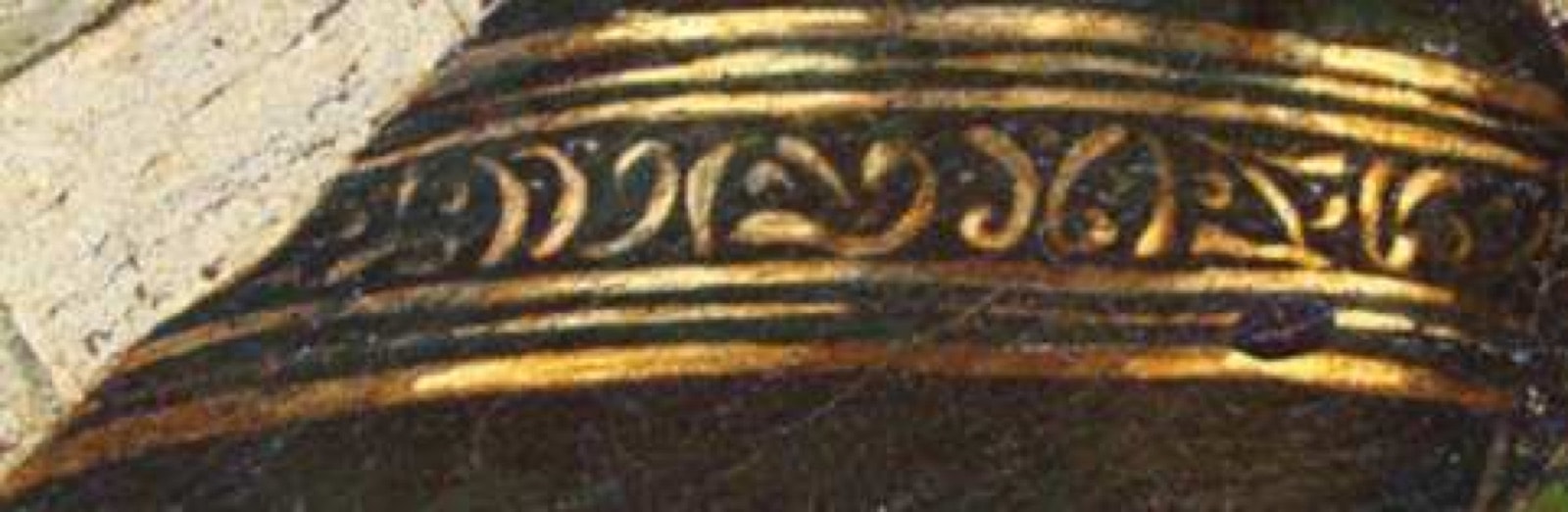
I adopt Clemente Baeta’s suggestion of placing the band in a position that
corresponds to the angle of vision, or of reading, that the Child has when
he looks at the tip of the boot of his left foot
The Child’s cap occupies a position symmetrical to that of the cap composed of two halves joined by 3 Love-knots, both being surmounted by pearls.