CHARLES THE BOLD
The Duke of Burgundy, first cousin of King Afonso V, is the figure kneeling on his left knee in the panel of Temporal Power (of the Archbishop).
“Nous les Portugalois” was how he defined himself, this son of the Infanta D. Isabel, sister of King Duarte, emphasising the kinship that bound him to Portugal and to the Illustrious Generation, to which he was greatly proud to belong.
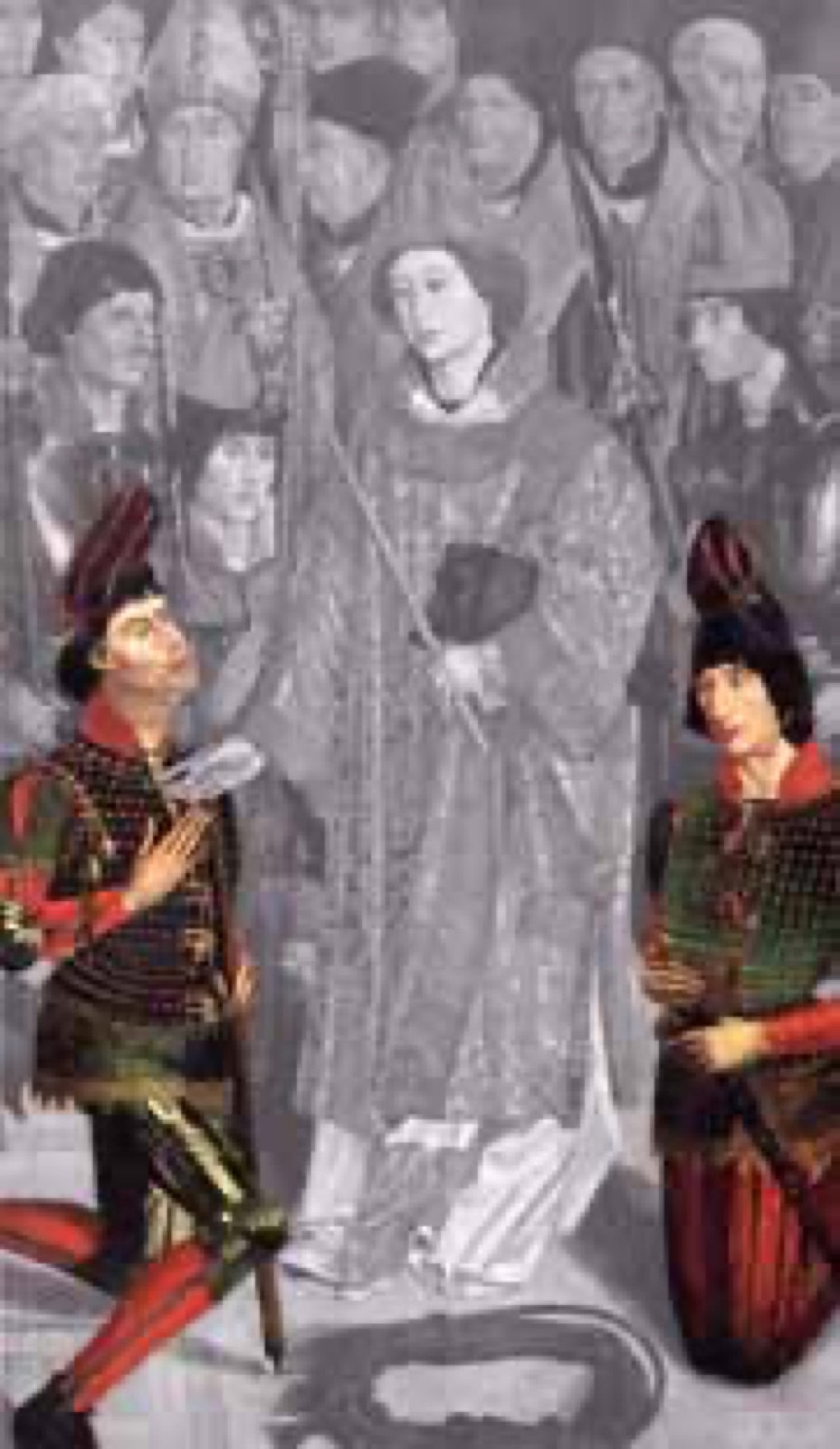
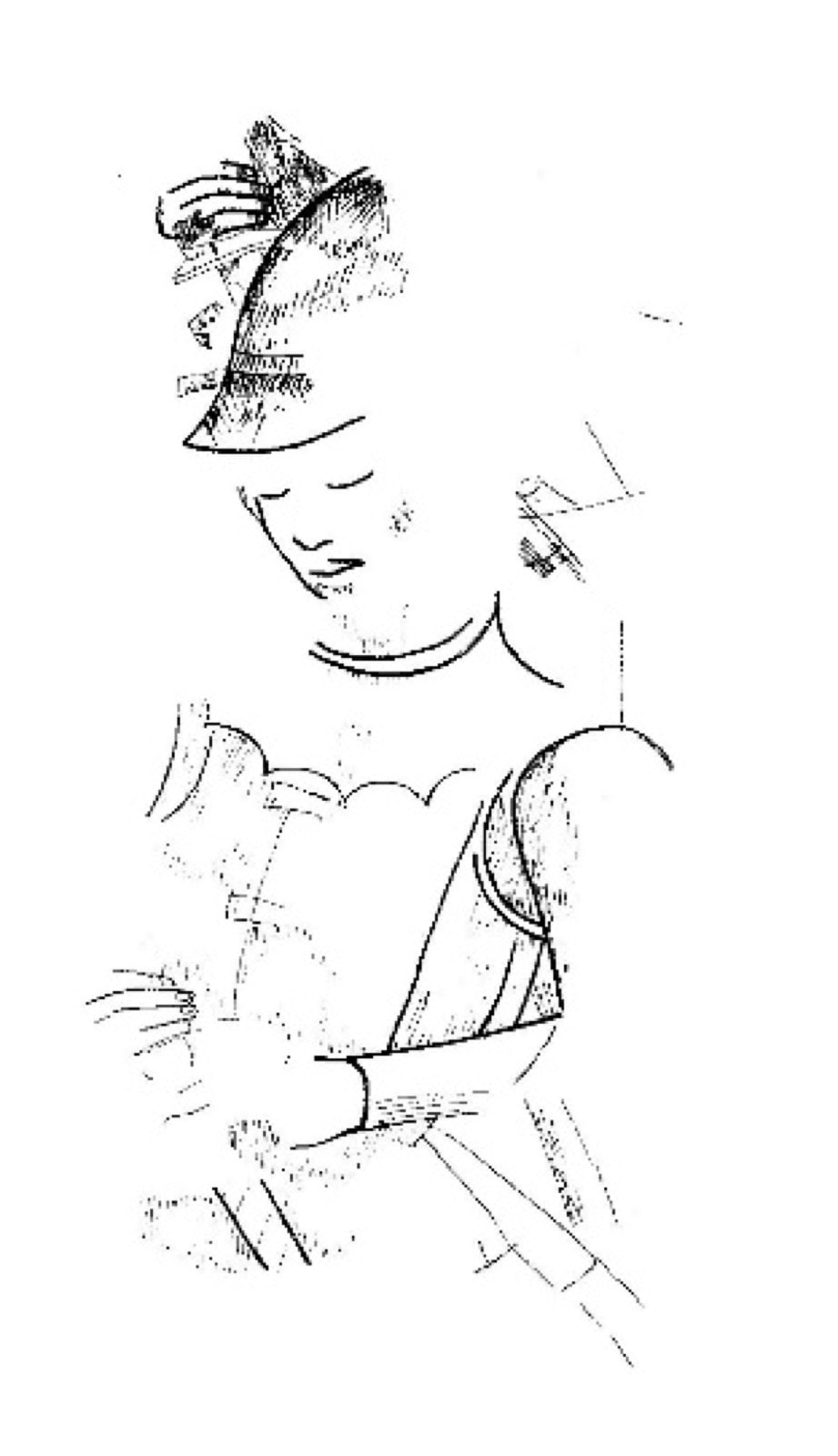
Charles the Bold rests his right hand upon his heart, and the “Saint” points, also with his right hand, to the same spot on the Duke of Burgundy’s breast, as though to corroborate the intention thus expressed.
The four other figures surrounding the royal aspect of Melchizedek in that panel are necessarily members of families related to that of Burgundy.
The eleven figures in the background (5 + 6) are predominantly clergy of the Roman Church, save for the one holding a book, often identified as a “chronicler”.
The life of the last Duke of Burgundy, the only one of Isabel’s three sons to reach adulthood, was marked by almost constant military activity, aimed at extending his dominions beyond the territory of the duchy and, above all, invariably directed towards emancipation from vassalage to the Crown of France.
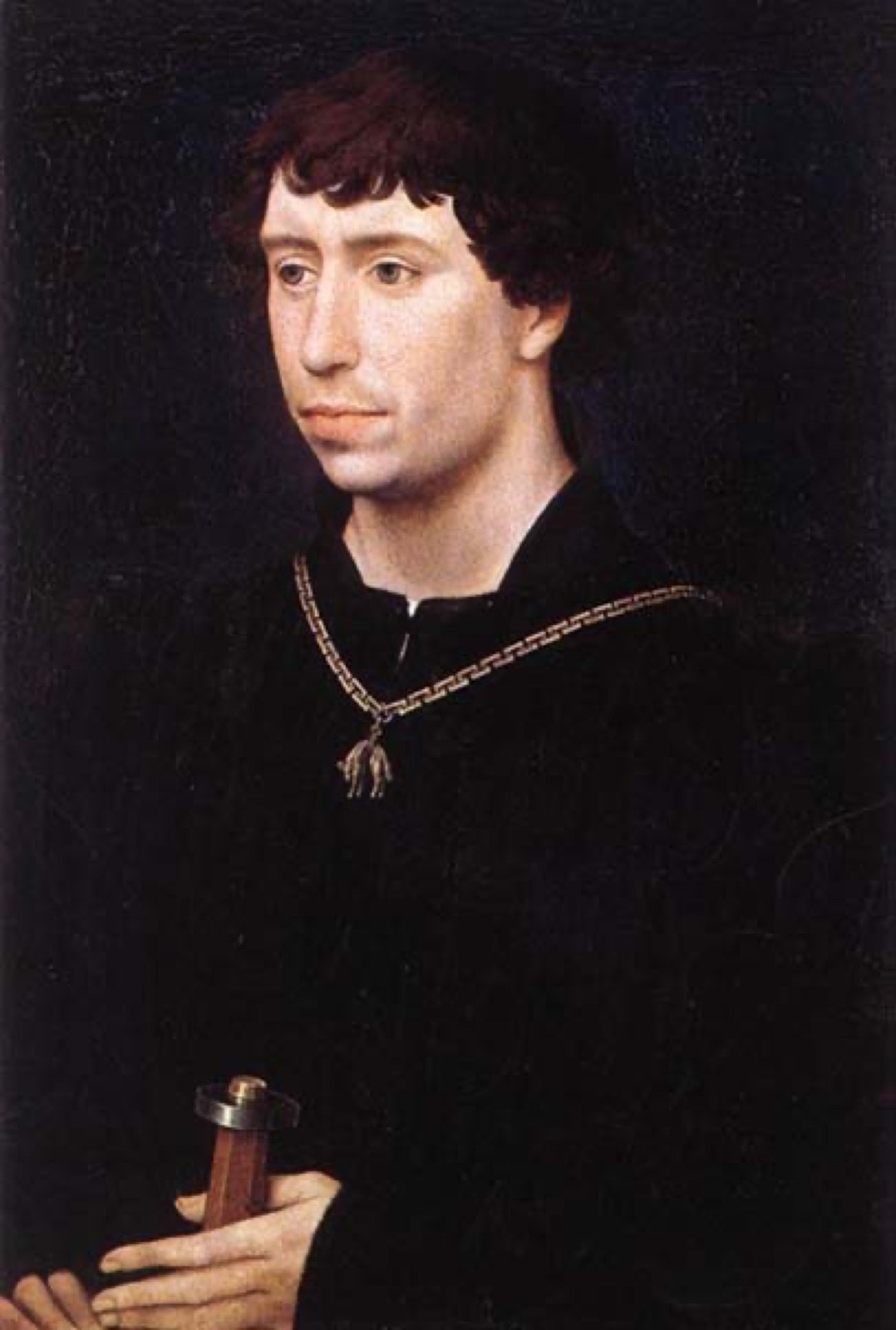
Nevertheless, after his father’s death, Charles’s actions betrayed designs not compatible with the aforementioned independence alone.
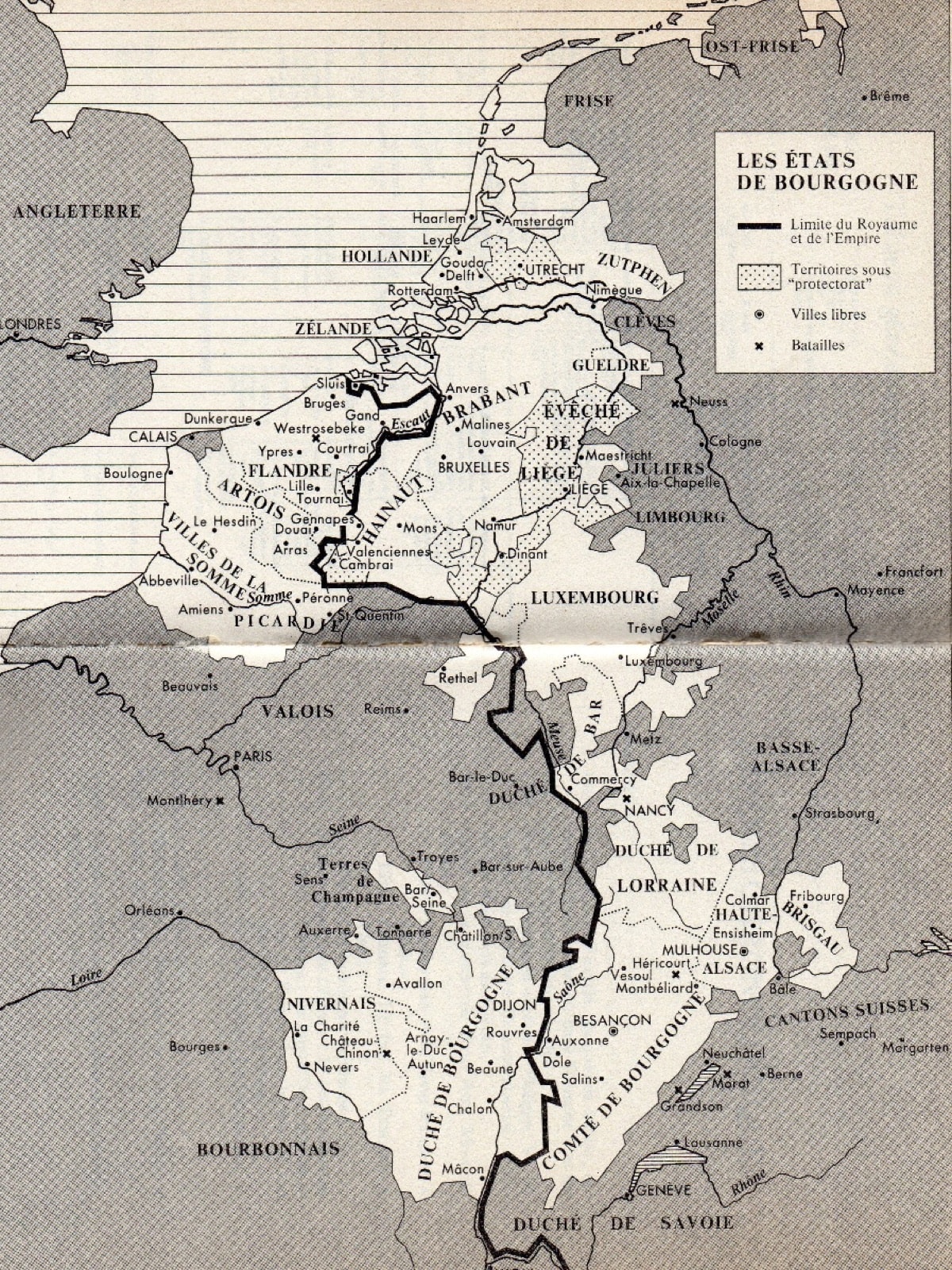
Indeed, Duke Charles came to be regarded as a possible Emperor of the Holy Roman Empire, a pretension never openly confirmed but which would have generated a direct confrontation with Frederick III of Germany, then holder of the title.
Charles of Burgundy married, in his first marriage, Isabella of Bourbon, cousin of Louis XI, from which marriage his only daughter was born, Mary of Burgundy, who was to marry Maximilian, future Emperor of the Holy Roman Empire, son of Frederick III and D. Leonor, sister of Afonso V. Charles would marry again, in his second marriage, the English princess Margaret of York.
The library assembled in the duchy was then, as the surviving catalogues attest, one of the largest in Europe, and alongside the romances of chivalry, the authors of antiquity were read in Latin, as well as their respective interpreters and continuators, the dukes promoting the translation of numerous works.
An example of such translations was the Cyropaedia of Xenophon, which the Duchess commissioned from an illustrious humanist of her circle, the Portuguese Vasco de Lucena, whose political principles Isabel sought to instil in her son: it is, indeed, a narrative in which the fictionalised education of Cyrus, king of the Persians, sets forth the model of the perfect Prince, balanced, just, humane and attentive to the voice of his subjects.
It is no wonder, then, at Charles’s interest in classical culture, since he had been initiated into the paradigms of chivalry through knowledge of its history and literature and stimulated by the epic narratives and feats of arms in which historical figures, such as Alexander the Great, or mythological ones, such as Hercules, were celebrated together.
In the Polyptych, the lance that Charles holds and the staff of Melchizedek form between them an angle of 19°.