KING AFONSO V
Astrologer, musician, alchemist, initiated into the Kabbalah, perhaps by the hand of Isaac Abravanel, his unfailing counsellor, royal treasurer and Chief Rabbi of Portugal, King Afonso V devoted himself equally to biblical exegesis and, above all, to the calculation of chronologies and to epilogistics, as may be inferred from the following passage of a letter (1503) from Christopher Columbus to the Catholic Monarchs:
“Saint Augustine teaches us that the world will come to an end in the year 7090 of the creation; and such is also the opinion of the sacred theologians and of Cardinal Pierre d'Ailly […]. Since, according to the calculation of King Afonso of Portugal, 6845 years have already passed, little time remains until the end of the world”.
Yet, several decades before Columbus, in a letter sent from Vila Viçosa on 19 October 1468, the 3rd Duke of Bragança, Dom Fernando, had already alluded to the monarch's millenarian preoccupations, masterfully epitomised in the Polyptych attributed to Nuno Gonçalves [MNAA], prophesying to him:
“[...]. If God has thus ordained, you shall not only have the kingdom of Castile, but you shall conquer that of Granada and draw forth the sword of Fez, and with it you shall conquer the whole world, and you must fail in neither the one nor the other”.
Afonso V of Portugal never succeeded in seizing Fez and drawing forth the sword from the tower in which it was said to be embedded.
Nevertheless, to commemorate the conquest of Tangier, surrendered after the conquest of Asilah on 24 August 1471, he created the Order of the Sword, which was to be reserved for only twenty-seven knights, a number corresponding to the monarch's age at the time of the conquest of the city of Ksar Es-Srhir (Alcácer Ceguer).
Indeed, the mythical origins of this Portuguese military order go back to the fabulous tale of a half-ruined tower that stood in North Africa, where a sword lay lodged in one of its stones. Whoever managed to retrieve it would conquer the whole of Africa and recover Jerusalem.
The report of the institution of the Order of the Sword, on a date not consensually agreed, attested by the sixteenth-century author — who adds that King Afonso V (1432–1481) had charged Gomes Eanes de Zurara with relating the events of the conquest of Fez, the capital city of the island of the West (Djezire-al-Magreb), at the epicentre of the royal decision (facts absent from all the works of the said chronicler) — was to be accepted without any hesitation by renowned scholars, convinced (or aware?) that the legendary atmosphere surrounding the Order of the Sword had been built upon a mythical foundation, common to the Matter of Britain, so cherished by the monarch who instituted it.
Notwithstanding, an anonymous, contemporary chronicle affirmed that Afonso V was to fulfil the prophecies of Saint Isidore, in the year 1475, entering as the Hidden One (a title applied to him for the first time, before the Germanías and before King Sebastião!) into Castile mounted upon a wooden horse, in order to establish a reign of order and virtue:
“When the hour had come and the prophecies of the misfortunes of Spain were being fulfilled, King Dom Afonso of Portugal entered the Kingdoms of Castile by way of La Codosera, and so that the people might have reason to believe that he was the Hidden One — according to a prophecy attributed to Saint Isidore which was being published, that the Hidden One was to enter Castile upon a wooden horse — this king, feigning to come ill, or perchance being truly so, entered borne upon a litter, taking great care that in the eyes of the people the ceremonies should conform as closely as possible to the prophecies; and as the Castilian people, accustomed to tyrannical liberty, were averse to seeing themselves ruled by any king, to the innocent who had no knowledge of those hidden prophecies they made believe that, by the signs that had appeared, this King Dom Afonso was the Hidden One, much extolling his virtues and greatness, and praising him for many excellent things which he, in truth, possessed”.
Thus, the Pastrana Tapestries may indeed celebrate the close of the first cycle of existence of the Order of the Sword, inaugurated by the minting of a coin called the Espadim.
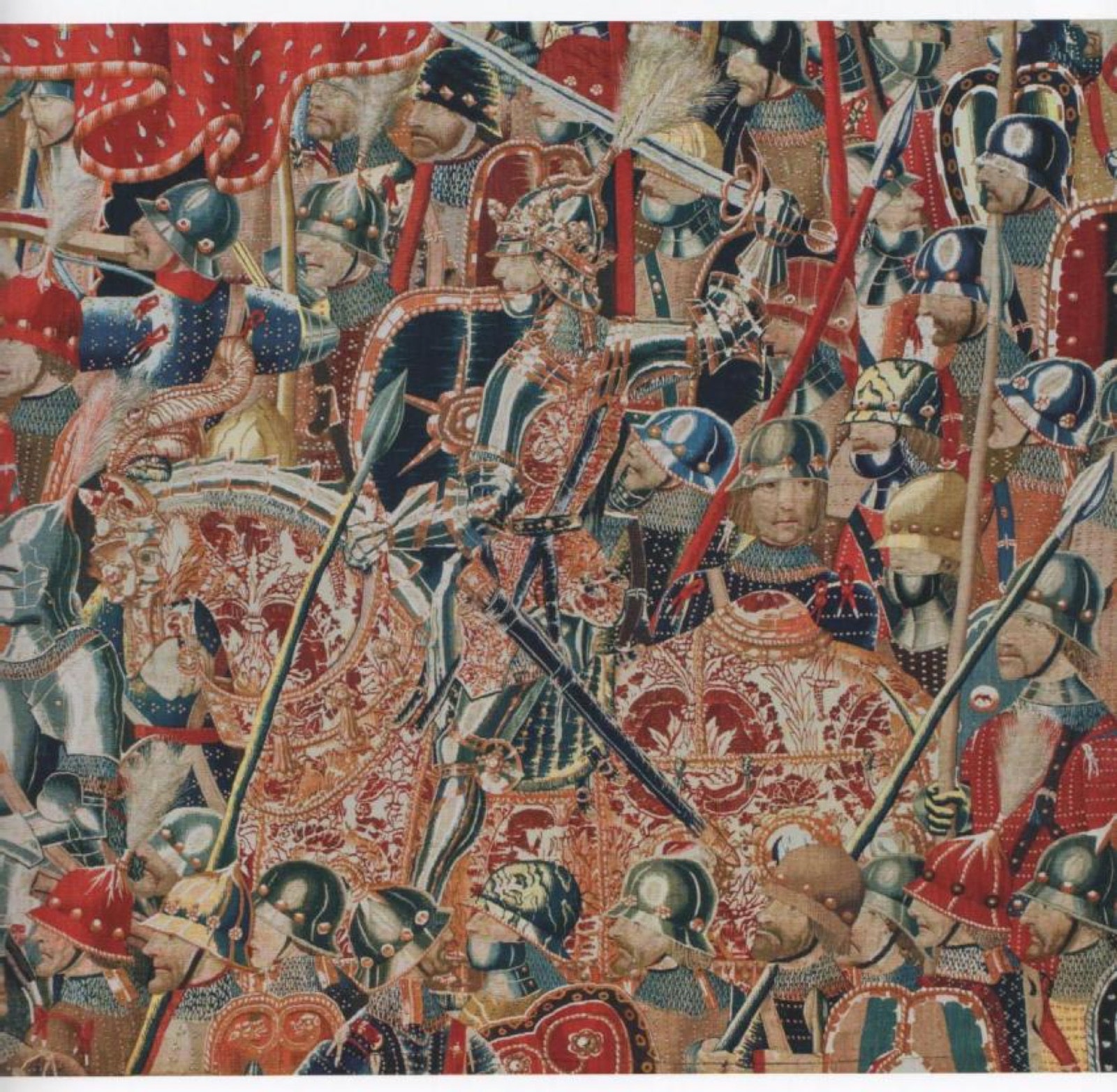
The Conquest of Asilah by King Afonso V, in a detail of the Pastrana Tapestries
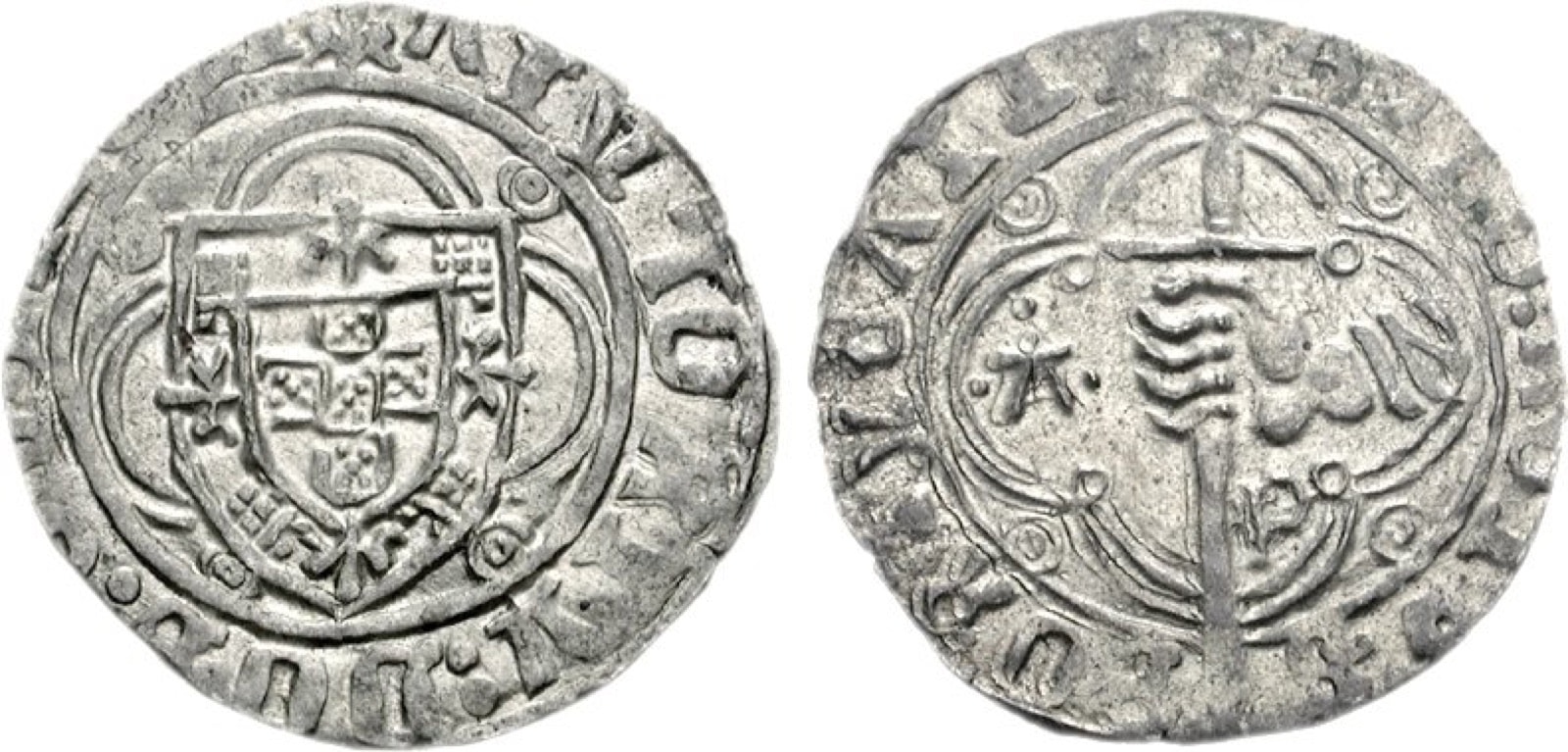
The Espadim, a billon coin (an alloy poor in silver), minted by King Afonso V (c. 1458–1460) to commemorate the institution of the Order of the Sword, replacing the white real.
On the obverse it bears the legend: Aivtorum Nostrum in no[mine] = Our help in the name [of God]; on the reverse: Affonsus Dei Gracia Regi and the Sword of Fez
within the quatrefoil
The body of King Afonso V's Device consisted of a Mill-wheel scattering droplets, attended, whose soul or motto was the words La Mais or Alá Mais.
The motto in question was, perhaps, a reminiscence of the cry of the medieval pilgrims to the Holy Land: Oitrée or Outrée, meaning Onward! Further beyond!, applicable to the crusading project of the African in the Algarve beyond the Sea which, it should be recalled, was a title introduced by King Afonso V.
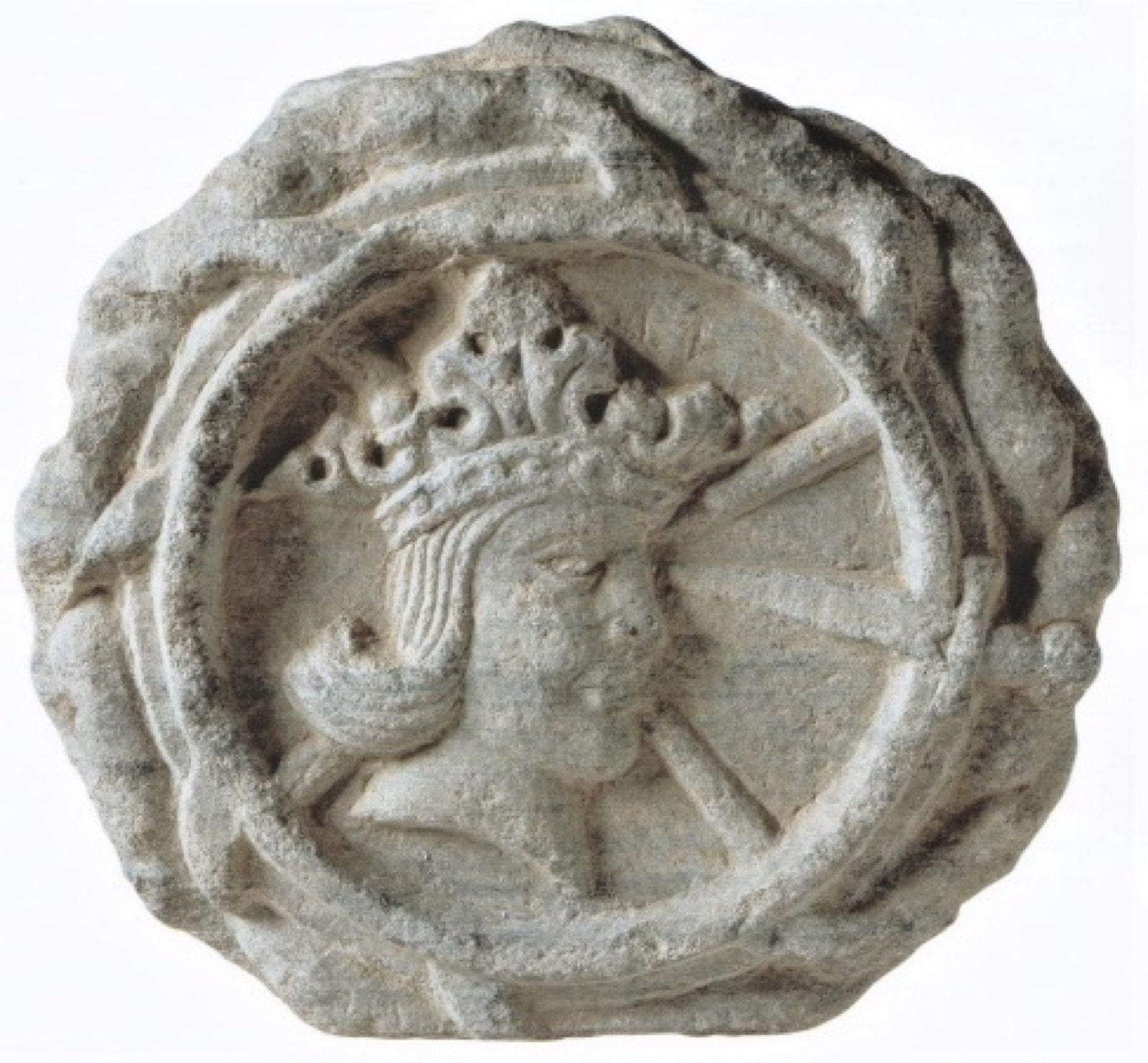
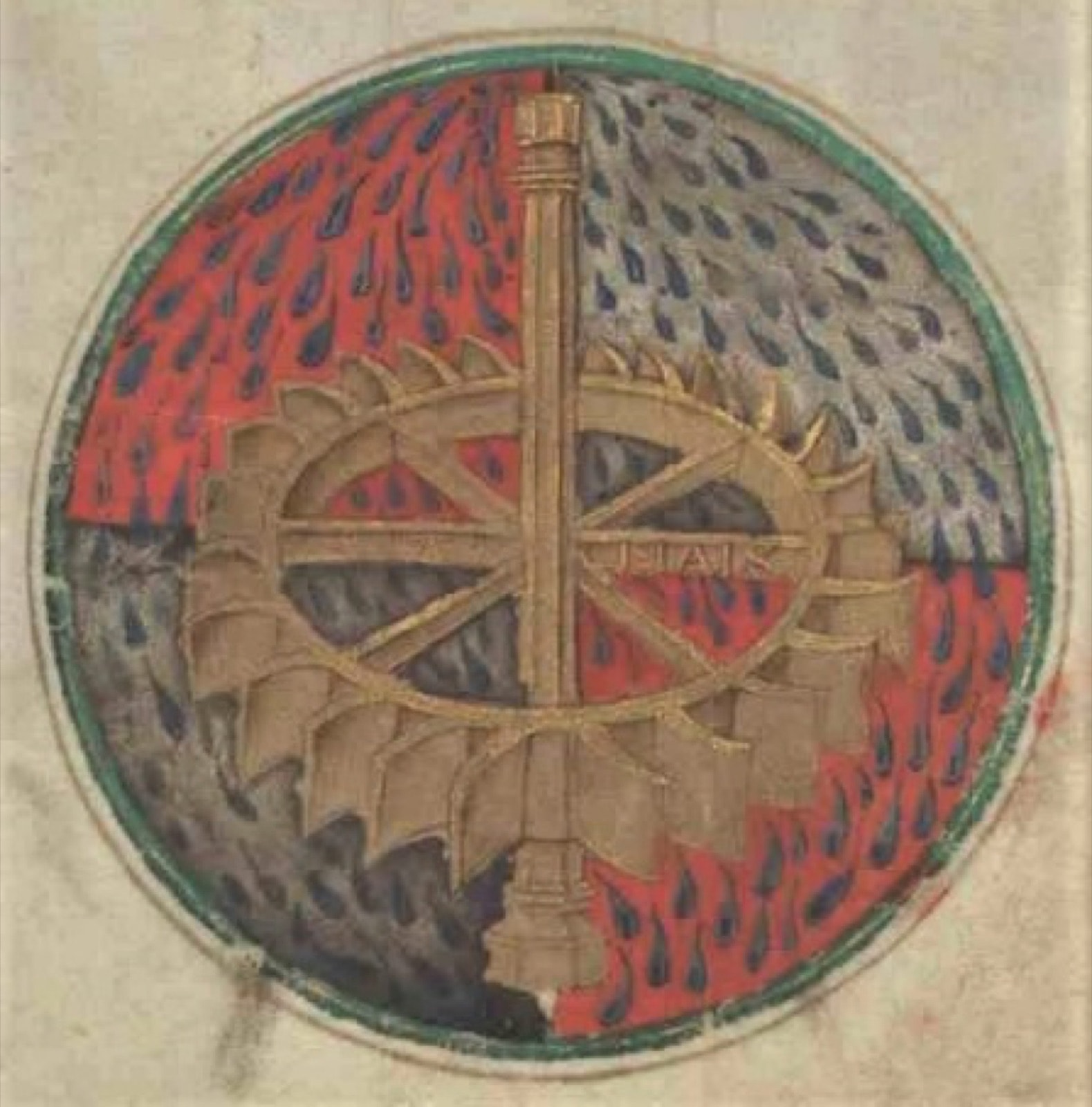
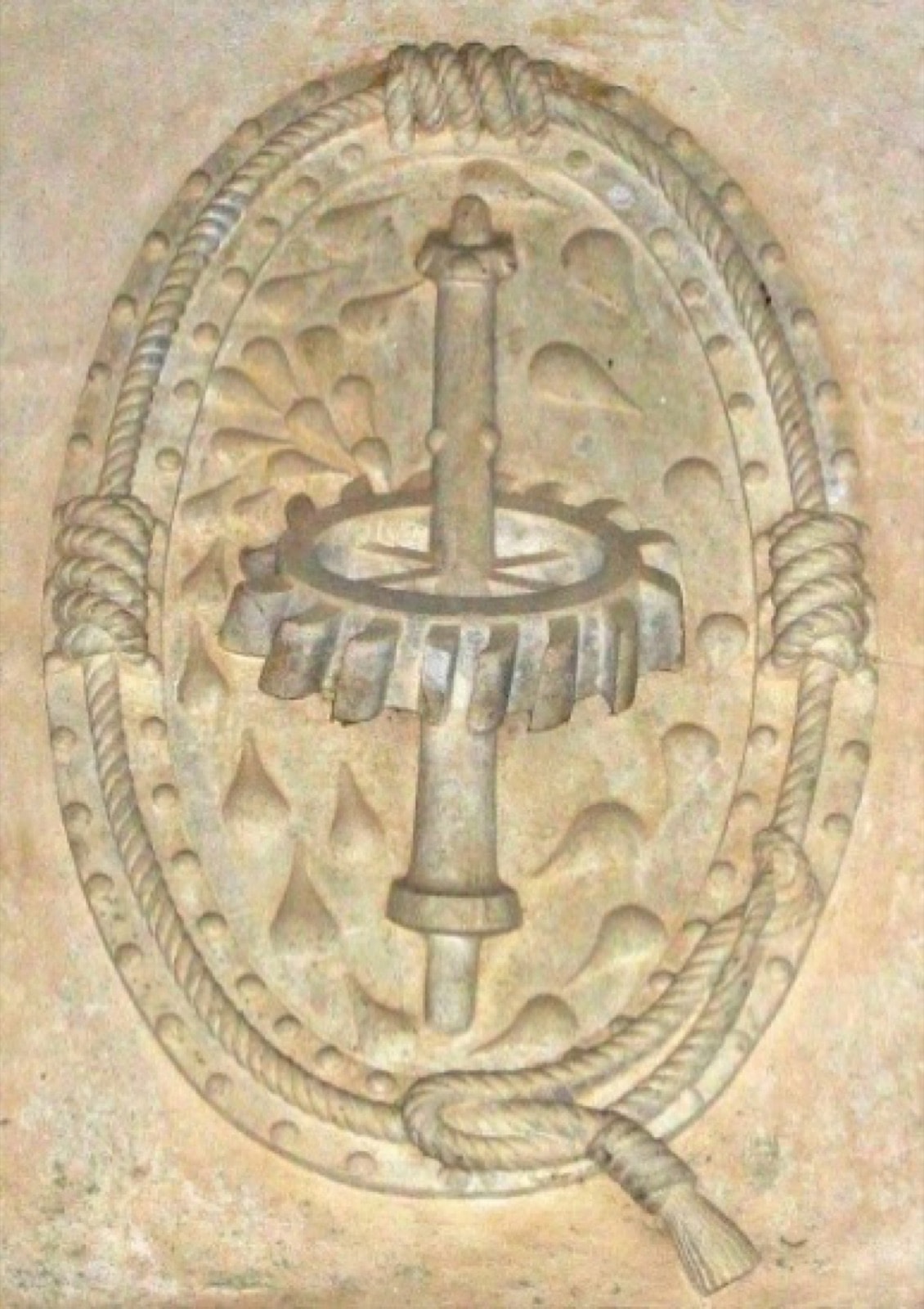
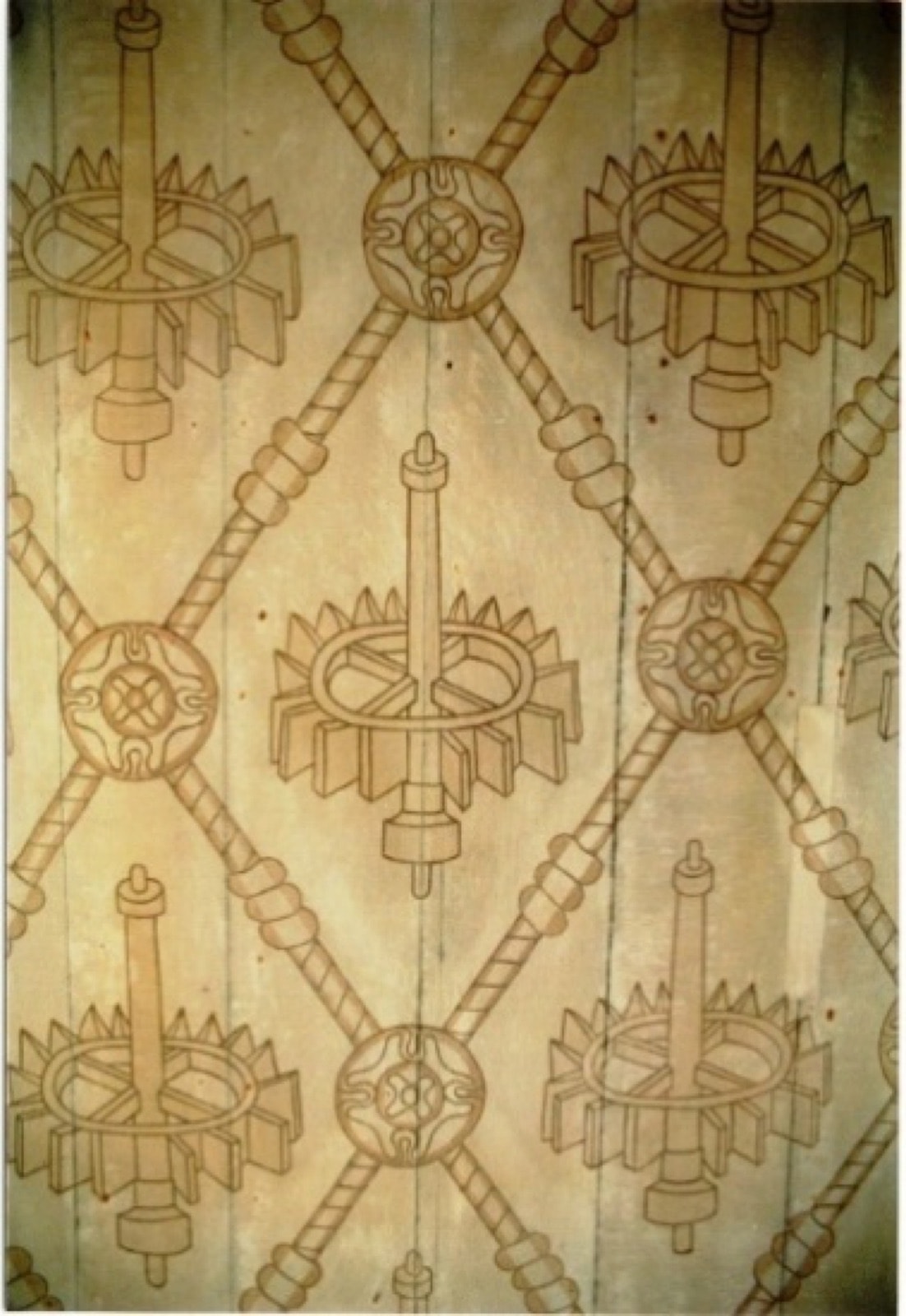
Vault Keystone of São Francisco de Beja, the Chronicle of King Afonso V by Rui de Pina [ANTT] and the Convent of Varatojo
The chroniclers relate that after the death of his cousin Charles the Bold at the Battle of Nancy (5 January 1477), Afonso V, disheartened and disillusioned, having grown weary of "the things of the world", intended to set out for Jerusalem, in fulfilment of an old vow.
Thwarted in his purpose, as a consequence of family interference, he resolved to “become a friar”, after summoning the Cortes at which he would make his solemn abdication in favour of King João II.
For this purpose he chose the Franciscan convent of Varatojo (near Torres Vedras), which he had founded in fulfilment of a vow he had made to Saint Anthony, seeking his aid for the Maghrebi conquests in which he was engaged.
There he had reserved for himself a modest chamber communicating with the choir, on the southern side, a room into which is cut a corner window bearing the arms of the Realm (perhaps already of the sixteenth century), overlooking the forecourt of the Gatehouse.
During the periods in which he stayed there he went about dressed in the mozzetta of the donates, prayed in the choir with the friars, hearing Mass from a tribune he had had made for himself, and ate with the community in their refectory, “for he was never again joyful and ever went about withdrawn, pensive and brooding, more as a man who was weary of the things of the world than as a king who esteemed them”.
Contributing significantly to this state of mind was also the papal disapproval of his marriage to his niece Dona Joana (1462–1530), daughter and universal heir of Henry IV of Castile and León, as well as the exile to Madeira of Dom Gonçalo Afonso de Avis de Trastâmara Fernandes (1476?–1539), the son of both, as stipulated by the Treaty of Alcáçovas (1479).
In the Polyptych, he is one of the two figures who kneels upon a single knee (an attitude reserved exclusively for royal persons).
The underlying drawing (subsequently rectified) shows him kneeling on both knees, holding a document (parchment?) in his left hand, perhaps a record of the pact made with Charles the Bold.
On Afonso V's cap one glimpses symbols befitting him alone: threads of gold (prestige and wealth) falling from the top, an elephant (a peaceable monarch) and a brim in the form of battlements (the Walls of Fez, whose conquest would have secured for him possession of the sword embedded in a tower, and with it Universal Empire?).
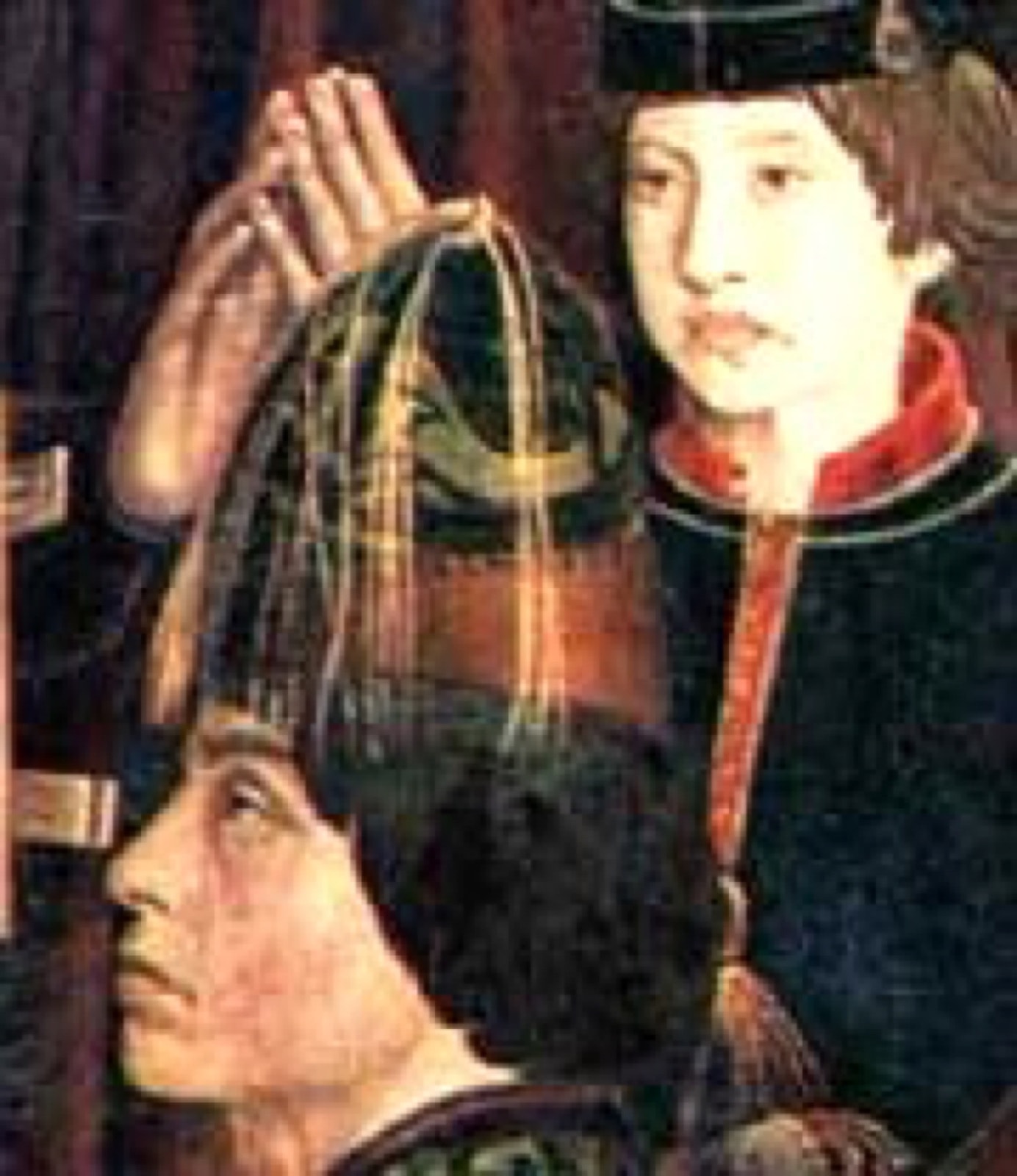
Considering the prominence of the elephant in the medieval context, the presence here of the proboscidean refers to Alexander the Great, and, by extension, to the monarchs of Avis as the embodiment of the ultimate empire, new Lords of Asia and of the trade with Persia, and so forth.
Symptomatically, in the Chronicle of the Emperor Clarimundo, its author, João de Barros, associates the elephant with the marvellous palace of Fanimor, the magus who prophesies the glorious future of Clarimundo and of Portugal:
“[…]. Fanimor, after exchanging some words of great affection with Clarimundo, taking him by the hand, went with all that company along the coast, until they came to a palace of marvellous making, for from afar it appeared to be an elephant with a castle upon it. And the eye was not deceived in this, for it was indeed fashioned in such a guise, and the entrance to it was through the flank of the elephant, and within it had many gardens, watered by a gracious stream which gushed forth into them from two springs of very abundant water. And in the castle that it bore upon its back stood the palace of Fanimor; whose riches and craftsmanship we shall pass over, for that which in perfection is great cannot be told in few words. And from its highest tower the whole island appeared covered with great woodlands, save that it had three fields after the manner of meadows, where the eyes received delight, and the dwellers of the land reaped the reward [recompense] of their labours in much bread, and all the other seeds necessary for sustenance. And these dwellers, who in number might be three thousand, lived in a town that stood on the elephant's flank on the northern side, and through a great gate they passed within to the palace, where for most of the time they went about taking their ease, for the land was so fruitful that with little labour from the dwellers it yielded all things necessary, and so temperate that neither heat nor cold was felt, all being set in a mean necessary to human nature”.